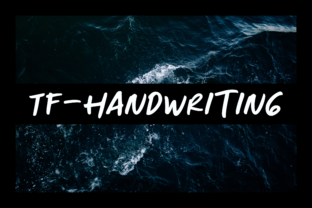
TF Handwriting
Nothing breaks through digital noise quite like the unmistakable warmth of authentic handwriting—especially when it’s captured with the subtle imperfections of a ballpoint pen gliding across paper. That’s precisely what makes TF Handwriting such a compelling typographic asset: it’s not a stylized simulation or a calligraphic flourish, but a faithful digital translation of real-world penmanship. Designed for designers who value sincerity over sterility, TF Handwriting bridges the gap between human expression and professional visual design—without sacrificing legibility, versatility, or polish.
Why Authentic Handwriting Resonates in Modern Design
In an era saturated with geometric sans-serifs and algorithmically optimized fonts, authenticity has become a strategic differentiator. TF Handwriting delivers that rare combination of personality and precision—its slight variations in stroke weight, natural baseline wobble, and organic spacing mirror how people actually write. This isn’t just aesthetic nuance; it directly supports visual hierarchy, emotional connection, and brand relatability. When used intentionally, it signals approachability, craftsmanship, and intentionality—qualities increasingly valued in branding, digital marketing, and UX design.
Practical Applications Across Creative Disciplines
TF Handwriting thrives where humanity needs to shine through structure. Its adaptability makes it especially effective in:
- Branding & logo design: Ideal for lifestyle brands, artisanal products, or service-based businesses aiming for intimacy—think boutique studios, wellness coaches, or independent publishers.
- Social media graphics: Stand out in feeds with hand-drawn-style quotes, limited-time offers, or behind-the-scenes storytelling that feels personal, not programmed.
- Packaging & print design: Adds tactile appeal to product labels, greeting cards, or event stationery—enhancing perceived value and emotional resonance.
- Editorial & web design: Perfect for pull quotes, section headers, or micro-interactions (e.g., “Thank you!” messages) that soften digital interfaces without compromising clarity.
- Presentation decks & merchandise: Elevates slides, posters, or apparel with a signature-level authenticity that reinforces brand identity without overwhelming content.
Crucially, TF Handwriting performs well across mediums—from high-res packaging to mobile UI elements—thanks to its clean vector construction and thoughtful kerning. Unlike many handwritten fonts that sacrifice readability at small sizes, TF Handwriting maintains strong character distinction even at 14–16px, making it viable for captions, footnotes, or interactive elements in web and app design.
Using TF Handwriting Thoughtfully
Like any expressive typeface, its impact depends on context and restraint. Here are key considerations for integrating it effectively:
- Pair strategically: Contrast TF Handwriting with a neutral, highly legible sans-serif (e.g., Inter, Helvetica Neue, or Montserrat) to anchor hierarchy and ensure scannability.
- Respect visual hierarchy: Use it for emphasis—not body text. Reserve it for headlines, callouts, logos, or short phrases where emotional tone matters most.
- Align with your color palette: Soft, muted tones or warm neutrals often complement its organic feel, while bold accent colors can amplify energy and contrast.
- Test across devices: Preview how letterforms render on both retina and standard displays, particularly in buttons or navigation elements where micro-interactions matter.
- Maintain consistency: If using TF Handwriting in a brand system, define clear usage guidelines—e.g., “Only for primary headlines and handwritten-style CTA buttons”—to preserve impact and avoid visual fatigue.
Remember: typography is never just about letters—it’s about voice, timing, and relationship-building. TF Handwriting doesn’t replace other typefaces; it enriches them. When deployed with purpose, it transforms flat layouts into memorable experiences, strengthens brand identity through consistent tonal cues, and invites audiences to pause, connect, and engage more deeply. In a world where attention is scarce and authenticity is currency, choosing the right creative assets isn’t just about aesthetics—it’s about communicating with clarity, confidence, and quiet humanity.