Zombiess
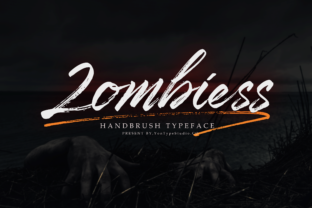
Zombiess isn’t just another display font—it’s a deliberate statement. With its jagged edges, uneven baseline, and unrefined texture, Zombiess delivers a raw, adventurous energy that cuts through polished digital noise. Designers reach for it when they need authenticity over perfection: album covers, event posters, indie game UIs, or bold social media visuals where personality matters more than polish. But because it’s so expressive, Zombiess is also easy to misuse—especially by those who assume “bold” means “versatile.” Let’s clear up what works, what doesn’t, and how to use Zombiess with intention—not impulse.
It’s Not Meant for Body Text (and That’s Okay)
One of the most common missteps? Using Zombiess for paragraphs, captions, or interface labels. Its irregular letterforms and tight spacing create real legibility challenges at small sizes or in long blocks. Readers won’t struggle to *notice* it—they’ll struggle to *read* it. A freelance blogger once applied Zombiess to an entire blog post header + body layout, hoping for “edgy credibility.” The result? High bounce rates and confused comments like “Is this broken?”
Instead, treat Zombiess like a spotlight—not ambient lighting. Use it sparingly and purposefully: a single headline, a logo lockup, a hero section banner. Pair it with a clean, highly legible sans-serif (like Inter, Open Sans, or even system fonts) for supporting text. That contrast doesn’t weaken Zombiess—it sharpens its impact.
License Clarity Matters More Than You Think
Zombiess is often found on free font aggregators—but not all versions are created equal. Some downloads lack proper licensing files, others bundle outdated builds missing critical OpenType features (like stylistic alternates or ligatures), and a few even include hidden tracking scripts (yes, really). One small business owner used a “free Zombiess” file from an unofficial site in a client’s branding package—only to receive a cease-and-desist email months later due to an unlicensed commercial use clause buried in the original designer’s terms.
Always verify the source. Reputable foundries or the official creator’s site (if available) will clearly state usage rights—personal, commercial, web, app, or print. If you’re embedding Zombiess in a website via @font-face, confirm the license explicitly permits web use. When in doubt, contact the creator directly. It takes five minutes—and saves hours of legal stress.
Weight & Width Aren’t Always What They Seem
Zombiess has a distinct visual weight—but that doesn’t automatically translate to typographic hierarchy. Its perceived boldness can overpower nearby elements if not balanced. For example, pairing Zombiess Regular with a standard “Bold” weight of another font often looks lopsided, not harmonious. Likewise, some free variants label themselves “Zombiess Bold” when they’re actually just manually stretched or outlined—not true optical bolds designed for readability.
Before committing to a version, open it in your design tool and test real combinations: Zombiess headline + your paragraph font at 16px, then at 24px. Adjust letter-spacing manually if needed (Zombiess often benefits from +20–40 units of tracking in all-caps settings). And never assume “Condensed” or “Extended” variants behave predictably—preview them in context, not just in a font menu.
Context Changes Everything
Zombiess thrives in gritty, tactile, or rebellious contexts—think street art, punk zines, or retro-futuristic interfaces. But drop it into a financial dashboard, a university course syllabus, or a healthcare brochure, and it sends mixed signals. It doesn’t mean “unprofessional”—it means “this isn’t the place for disruption.” A marketing director once used Zombiess for a fintech SaaS landing page headline, aiming for “memorable energy.” Visitors interpreted it as unserious—conversion dropped 18% in A/B testing versus the neutral alternative.
Ask yourself: Does this project value immediacy and attitude—or clarity and trust? If the answer leans toward the latter, Zombiess may be the wrong tool, no matter how striking it looks in isolation. There’s zero shame in choosing a different font. Good typography serves the message—not the trend.
Rendering Varies—Especially Online
What looks razor-sharp on your high-DPI Mac may appear muddy or aliased on Windows browsers or older Android devices. Zombiess’ fine details—those intentional rough edges—can blur or disappear entirely without proper hinting or subpixel rendering support. One educator used Zombiess for slide titles in a widely shared online workshop; participants using Chrome on budget laptops reported “fuzzy, hard-to-focus text” during live sessions.
Test across real devices and browsers before finalizing. Export static PNGs of key text treatments and view them on mobile. For web use, consider serving Zombiess as SVG text for critical headlines (with fallback web fonts), or use it exclusively in hero graphics where pixel fidelity is controllable. Never rely solely on browser-rendered @font-face for mission-critical legibility.
Don’t Over-Design Around the Font
Zombiess already carries strong visual weight—so resist the urge to add distressed textures, grunge overlays, or excessive drop shadows “to match the vibe.” One freelancer layered Zombiess over a scanned paper texture, added noise, and applied a heavy outer glow—resulting in a logo that looked unintentionally chaotic rather than intentionally raw.
Let Zombiess speak for itself. Use ample whitespace. Choose one accent color—no more. Align elements cleanly, even if the font feels wild. That restraint makes the font’s character feel intentional, not accidental. Think of Zombiess as the lead guitarist: powerful alone, but it needs space to breathe—and a steady rhythm section behind it.
Before You Download or Deploy
- Check the character set: Does it include accented characters, currency symbols, or punctuation you’ll actually use? Missing glyphs force awkward workarounds.
- Preview real content: Type your actual headline—not “The quick brown fox.” Does “$19.99 OFF” render cleanly? How about “Été” or “naïve”?
- Compare file size: Web fonts over 150KB slow down load times. Lightweight WOFF2 versions are ideal for performance.
- Verify updates: Has the font been maintained in the last 2–3 years? Outdated files may lack modern OpenType features or bug fixes.
Zombiess earns its place when treated with respect—not as decoration, but as a deliberate design decision. It won’t solve vague branding goals or compensate for weak messaging. But in the right setting, with thoughtful execution, it adds unmistakable presence. Start small. Test honestly. Prioritize function alongside flair. And remember: the strongest designs don’t shout—they resonate.