Estele: A Luxurious Script Font with Elegant Swashes
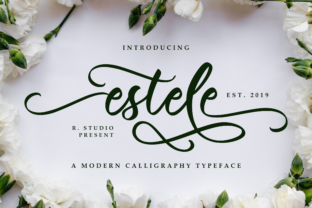
Estele isn’t just another script font—it’s a carefully crafted design asset that brings quiet confidence and refined elegance to the page. With its flowing, confident strokes and thoughtfully designed swashes, Estele feels both personal and polished. It’s not overly ornate or fussy, but it’s never plain either. Think of it as the kind of typeface you’d choose for a boutique wedding invitation, a small-batch skincare label, or the headline on a thoughtful blog post about slow living—where tone matters as much as text.
What Makes Estele Stand Out Visually
At its core, Estele is a modern script font—designed to mimic skilled penmanship without sacrificing consistency or clarity. Its letterforms have subtle contrast, gentle tapering, and graceful entry/exit strokes. What truly sets it apart are the optional swashes: not just decorative flourishes, but intentional extensions that enhance rhythm and movement. These aren’t random; they’re calibrated to work in context—on uppercase letters like “T,” “L,” and “F,” and on select lowercase characters where they add emphasis without overwhelming.
The overall personality is warm, sophisticated, and quietly confident. It avoids the cutesy energy of many handwritten fonts and the stiff formality of traditional calligraphy. Instead, Estele lands somewhere in between: approachable enough for a handmade candle brand, yet elevated enough for a luxury hotel’s seasonal newsletter.
Where Estele Works Best—And Where It Doesn’t
Estele shines as a display font—not for body copy, but for moments that deserve attention and intention. You’ll see it used well in logo design (especially for service-based businesses like yoga studios, florists, or freelance writers), editorial design (magazine headlines, book covers, poetry chapbooks), and packaging design (think artisanal teas, organic soaps, or small-run stationery).
It also performs beautifully in social media graphics—particularly Instagram carousels or Pinterest pins where a single strong headline anchors the visual. On websites, it works best in hero sections, testimonials, or section headers—never in navigation menus or long paragraphs. And while it’s been used successfully in print invitations and greeting cards, avoid pairing it with ultra-thin paper stocks or low-resolution digital previews: the fine swash details can blur or disappear if output conditions aren’t controlled.
That said, Estele isn’t ideal for tech startups launching a SaaS platform, law firm brochures requiring strict neutrality, or multilingual content with extended Latin or Cyrillic character sets—unless you’ve confirmed full language support in the version you’re licensing.
How Estele Shapes Perception and Engagement
Typefaces influence how people feel before they even read a word—and Estele leans into warmth, care, and craftsmanship. When used consistently across touchpoints (e.g., matching swash styles in a logo, website header, and business card), it reinforces brand identity without needing extra explanation. That consistency builds recognition over time, especially for small businesses where every detail contributes to perceived professionalism.
But it’s not just about aesthetics. Because Estele’s swashes are optically balanced—not purely decorative—they support visual hierarchy. A headline set in Estele draws the eye naturally, guiding readers toward supporting sans serif or serif text beneath. That subtle choreography improves scanning behavior and increases dwell time, particularly in editorial or marketing contexts where first impressions drive engagement.
Importantly, Estele doesn’t sacrifice legibility for flair. Its x-height is generous, counters are open, and spacing is tuned for clarity at larger sizes. Still, always test readability at your intended size and medium: what reads perfectly at 48pt on a retina screen may need adjustment at 36pt on matte-printed packaging.
Practical Tips for Using Estele Well
Start by reviewing what’s included in your license. Most Estele packages offer at least one weight (often Regular) with alternate characters, discretionary ligatures, and swash variants—accessible via OpenType features in apps like Adobe Illustrator or Affinity Publisher. Don’t skip this step: enabling swashes manually gives you control over where and how they appear.
For font pairing, lean into contrast. Estele pairs cleanly with neutral sans serifs like Inter, Manrope, or Helvetica Now—not for stylistic harmony, but for functional balance. The script handles voice and emotion; the sans serif delivers clarity and structure. If you prefer serif companions, try modestly weighted options like Merriweather or IBM Plex Serif, avoiding anything with heavy stress or dramatic serifs that compete for attention.
Before finalizing, test Estele in real-world scenarios: paste sample text into your CMS editor, preview email headers in Litmus, or hold a printed proof under natural light. Check how the swashes interact with adjacent letters—some combinations (like “Th” or “Fl”) may need manual kerning tweaks. Also verify licensing terms: Estele is typically a commercial font, meaning standard desktop licenses cover most small business uses, but web or app embedding often requires separate permissions.
A Final Note on Intentionality
Using Estele well isn’t about applying it everywhere—it’s about choosing it deliberately. It’s the difference between selecting a font because it looks “pretty” and selecting it because it reflects how your audience should feel when they encounter your work: seen, valued, and invited in. Whether you're designing a logo for a new ceramics studio or crafting the cover for a memoir, Estele offers more than decoration. It offers tone, texture, and trust—quietly, confidently, and without shouting.
If you've used Estele in a project that surprised you—maybe it softened a corporate rebrand or added unexpected gravitas to a playful brand—chances are you leaned into its strengths: restraint, rhythm, and human-scale detail. That’s the mark of a premium font done right.