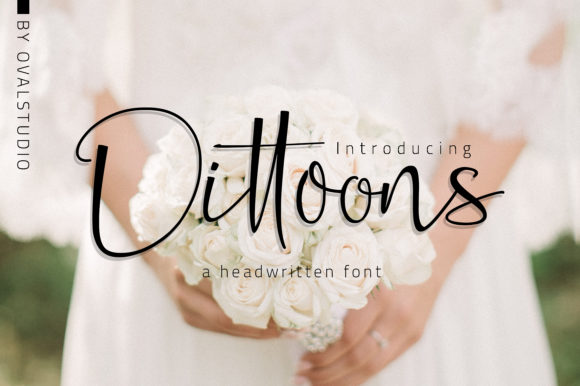
Follow Your Dreams Font
Follow Your Dreams is a handwritten display typeface designed to evoke warmth, sincerity, and personal expression. Its characters feature subtle irregularities, gentle contrast, and rhythmic spacing—hallmarks of authentic pen-on-paper writing. Unlike script fonts that prioritize flourish or formality, Follow Your Dreams balances legibility with charm: letters connect naturally but avoid excessive ligatures or dramatic swashes, making it more approachable for short-form use than highly decorative alternatives.
Designers and content creators often explore Follow Your Dreams when seeking a font that communicates optimism, individuality, or heartfelt messaging—particularly in contexts where tone matters as much as information. It’s commonly used in greeting cards, social media graphics, boutique branding, wedding stationery, and motivational quotes. However, its utility depends less on aesthetic appeal alone and more on alignment with functional requirements and audience expectations.
Why Consider Follow Your Dreams?
Interest in Follow Your Dreams typically arises from one or more practical needs:
- Tone alignment: When the goal is to project sincerity, gentleness, or encouragement—especially in emotionally resonant messaging—handwritten fonts like Follow Your Dreams can reinforce voice without relying solely on copy.
- Visual differentiation: In crowded digital spaces, a distinctive yet readable handwritten style helps text stand out among sans-serif and serif defaults.
- Brand personality support: Small businesses, creatives, educators, and wellness professionals sometimes choose such fonts to reflect values like authenticity, care, or approachability.
It’s important to note that interest doesn’t always translate to suitability. Evaluating Follow Your Dreams requires looking beyond initial impression toward how it performs across real-world applications.
Benefits and Practical Strengths
The primary strength of Follow Your Dreams lies in its expressive consistency. Because it was crafted as a unified set—not assembled from scanned handwriting—it maintains even weight distribution and balanced letter proportions. This contributes to reliable rendering across devices and platforms, especially when exported as OpenType or web-optimized WOFF files.
Its moderate x-height and open counters improve readability at larger sizes (e.g., 24–60 pt), and its lack of extreme thin strokes means it holds up well in print and on high-resolution screens. For short headlines, pull quotes, logos, or callouts, it delivers visual warmth without sacrificing clarity.
Additionally, licensing is generally straightforward. Most reputable vendors offer standard desktop, web, and app licenses with clear usage terms—no hidden restrictions around embedding or redistribution, provided attribution isn’t required and commercial use is permitted under the chosen plan.
Tradeoffs and Key Considerations
Like all display fonts, Follow Your Dreams comes with inherent limitations. It is not intended for body text. At small sizes (below 16 pt), legibility declines noticeably due to its variable stroke width and organic spacing. Readers may struggle with character distinction—especially between similar forms like “a” and “o”, or “l” and “i”—in extended reading contexts.
Another consideration is stylistic narrowness. While its charm is consistent, it conveys a specific emotional register: upbeat, personal, informal. That makes it less adaptable for serious, technical, or authoritative applications—such as legal disclaimers, academic publications, or enterprise dashboards—where neutrality or precision is prioritized.
Language support is also limited. Most versions include Latin-based characters (A–Z, a–z, numerals, common punctuation) but lack extended diacritics, Cyrillic, Greek, or East Asian glyphs. Projects requiring multilingual content or localization should verify glyph coverage before committing.
When Follow Your Dreams Is a Strong Fit
Follow Your Dreams works best in focused, intentional applications where its expressive qualities enhance rather than distract:
- Short-form visual communication: Social media banners, Instagram quote posts, Pinterest graphics, or email headers benefit from its inviting presence.
- Personal or small-business branding: A yoga instructor’s workshop flyer, a handmade soap label, or a children’s book title page can gain cohesion and warmth using this font as a primary accent.
- Motivational or celebratory materials: Graduation announcements, milestone certificates, or gratitude cards align naturally with its optimistic tone.
In these cases, pairing Follow Your Dreams with a neutral, highly legible sans-serif (e.g., Inter, Lato, or Roboto) for supporting text creates effective visual hierarchy and ensures accessibility.
When Alternatives May Be More Appropriate
If your project demands versatility across multiple contexts—or if you anticipate scaling usage beyond isolated highlights—other options merit comparison. For example:
- Need for extended text: Fonts like Quicksand, Comfortaa, or Nunito offer friendly, rounded sans-serif styles with full paragraph readability and broader language support.
- Desire for refined elegance: Script fonts such as Great Vibes or Dancing Script provide more formal variation while retaining handwritten character—useful for invitations or luxury branding.
- Requirement for accessibility compliance: Fonts designed with WCAG contrast and spacing guidelines in mind (e.g., Open Dyslexic, Atkinson Hyperlegible) are better suited for public-facing educational or governmental content.
Also consider whether a custom lettering solution—commissioned for a specific brand or campaign—might deliver greater uniqueness and control than an off-the-shelf font like Follow Your Dreams.
Making an Informed Decision
Before selecting Follow Your Dreams, ask yourself three questions:
- What is the primary role of typography here? If it’s to guide understanding or support dense information, prioritize function over flair. If it’s to evoke feeling or signal identity, expressive fonts become more relevant.
- Where and how will this text appear? Test the font at actual size and context: on mobile screens, printed at 300 dpi, alongside your color palette, and next to supporting typefaces. Rendering inconsistencies or color contrast issues may only emerge in situ.
- Does it scale with your goals? A font choice made for a single Instagram post may not serve a full website redesign. Evaluate long-term maintainability, licensing scope, and team familiarity.
Finally, remember that typography is one component of communication—not a substitute for thoughtful content or design strategy. Follow Your Dreams can enhance intention, but it won’t compensate for unclear messaging or inconsistent visual systems.
For those evaluating display fonts with expressive intent, Follow Your Dreams remains a viable, well-crafted option—provided its strengths match your specific constraints and objectives. As with any design tool, its value emerges not from standalone appeal, but from purposeful application.