Handle: A Casual Handwritten Font with Character
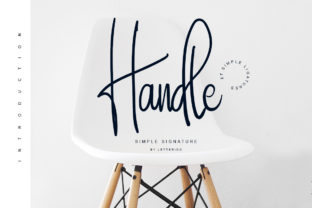
There’s something quietly powerful about a font that feels like it was drawn—not designed. Handle is exactly that: a simple, casual handwritten typeface with a distinct and original style. It doesn’t try to mimic calligraphy or imitate brushwork. Instead, it captures the relaxed rhythm of everyday handwriting—slight inconsistencies, gentle slant, soft curves, and intentional imperfections. That authenticity is why designers, educators, small business owners, and content creators keep returning to it.
Why Handle Stands Out (Without Trying Too Hard)
Most handwritten fonts fall into two camps: overly polished (losing warmth) or chaotically irregular (sacrificing readability). Handle strikes a rare balance. Its letterforms are consistent enough for extended reading—think short headlines, social captions, or product labels—but retain enough variation to feel human. The lowercase “a” and “g” have subtle alternate forms; the “t” has a slight upward flick; spacing breathes naturally rather than locking into rigid grids.
This isn’t just aesthetic preference—it’s functional. In digital spaces where attention is fragmented, Handle communicates approachability at a glance. A café’s Instagram story using Handle feels more inviting than one in a sleek sans-serif. A teacher’s printable worksheet in Handle feels less formal, more supportive. A freelance illustrator’s portfolio headline in Handle signals creativity without shouting.
Creative Applications That Actually Work
Handle thrives where personality matters more than precision. Here’s where it delivers real value:
- Small business branding: Local bakeries, indie bookshops, or handmade goods sellers use Handle for shop signage, packaging tags, and email headers. It reinforces authenticity without requiring custom lettering.
- Educational materials: Teachers apply Handle to handouts, classroom posters, or digital slide titles. Its friendly rhythm reduces cognitive load for younger learners—and feels less intimidating than rigid fonts.
- Digital content: Bloggers embed Handle in featured quotes or section dividers. Newsletter creators use it sparingly for subheads—never body text—to add warmth without compromising screen legibility.
- Print-on-demand & crafts: Because Handle includes clean outlines and generous x-height, it scales well on mugs, tote bags, and greeting cards—even at small sizes.
Crucially, Handle works best when paired intentionally. Try it with a neutral sans-serif (like Inter or Open Sans) for contrast: Handle for the headline, the sans for supporting text. This pairing keeps hierarchy clear while letting Handle’s character shine—without overwhelming the layout.
Adapting Handle Across Audiences and Platforms
One size doesn’t fit all—and neither does one font treatment. How you use Handle should shift with your audience and medium:
For Educators & Trainers
Use Handle in lesson slides only for key concepts or question prompts—not full paragraphs. Its informality lowers barriers, but overuse can blur focus. Stick to 24pt minimum for projected text, and always test contrast against your background color. A light gray Handle headline on white works; pale yellow on cream may not.
For Marketers & Small Business Owners
Handle shines in storytelling contexts: “Our Story” pages, founder bios, or customer testimonials. Avoid it in legal disclaimers or pricing tables—clarity trumps charm there. On Instagram, use Handle in Canva templates for quote graphics, but export as PNG (not web font) to ensure consistency across devices.
For Designers & Freelancers
Treat Handle as a tool—not a signature. It’s versatile, but not universal. Pair it with thoughtful spacing: increase letter-spacing slightly (+20–40 units) for all-caps headlines to prevent crowding. For logos, simplify—use only uppercase or only lowercase consistently, and avoid stretching or skewing the glyphs. Its strength is honesty, not distortion.
Keeping It Clear, Consistent, and Original
Using Handle thoughtfully means honoring its intent—not forcing it into roles it wasn’t built for. Here’s how to stay grounded:
- Respect hierarchy: Let Handle lead, then step back. If your audience needs to scan quickly (e.g., event flyers), use it only for the main title—not dates, times, or locations.
- Maintain contrast: Handle has low stroke contrast, so it needs strong background contrast. Dark charcoal on off-white? Yes. Medium gray on light beige? Test it—many screens will wash it out.
- Limit variations: Don’t mix Handle with three other handwritten fonts. One expressive voice is enough. If you need emphasis, use bold weight (if available) or strategic color—not a second script.
- Stay audience-aware: A financial advisor’s client report shouldn’t open with Handle. But their quarterly newsletter’s “What’s New This Season?” header? That’s perfect territory.
Originality comes from restraint—not ornamentation. You don’t need swashes, flourishes, or layered textures to make Handle feel fresh. Try setting it in a single unexpected color (deep terracotta, muted sage), or align it flush left in a centered layout for quiet tension. These small choices reflect intention—not trend-chasing.
Real Projects, Real Results
A Portland-based pottery studio used Handle for their workshop schedule board—hand-lettered digitally, then printed on kraft paper. Customers reported feeling “more welcome,” citing the font’s lack of formality. A homeschooling parent created weekly learning trackers in Handle, then shared the template freely online; it’s been downloaded over 12,000 times because it felt “calm, not cluttered.” A Brooklyn bookstore added Handle to their loyalty program cards—just the member name and “Thank you”—and saw a 17% uptick in card sign-ups, likely due to perceived personalization.
None of these relied on gimmicks. They leaned into what Handle does best: signal warmth, invite engagement, and support clarity—without demanding attention.
Getting Started—Simply
You don’t need design expertise to use Handle well. Start small: replace one generic heading in your next Canva graphic. Print a short quote in Handle and hold it up—does it feel right in your space? Does it match the tone of your message? If yes, go further. If not, pause and ask why—not to fix the font, but to clarify your goal.
Handle isn’t about looking handmade. It’s about feeling human-centered. And in a world saturated with algorithmic polish, that quiet distinction is more valuable than ever.