Lovina: A Sweet, Cool Handwritten Font That Fits How We Design Today
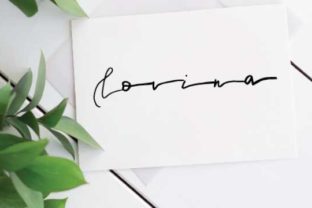
Handwritten fonts used to mean one thing: playful birthday cards or whimsical café menus. But today’s design landscape is different. People don’t just want personality—they want authenticity that feels intentional, not improvised. That’s where Lovina stands apart. It’s not a scribbled afterthought or an overly stylized script. Lovina is a sweet and cool handwritten font with a simple feel—clean enough for professional use, warm enough to humanize digital spaces, and consistent enough to scale across platforms without losing charm.
Why Simplicity in Handwriting Is Gaining Real Traction
Over the past five years, we’ve seen a quiet but steady shift away from ornate scripts and toward restrained, legible handwriting styles—especially in branding, digital content, and product interfaces. This isn’t about minimalism for its own sake. It reflects how people now interact with design: quickly, across devices, often while multitasking. A font like Lovina works because it balances familiarity and distinction. Its lowercase “a” and “g” have subtle character, but its spacing, rhythm, and x-height are carefully calibrated—not too tight, not too loose, never distracting.
This evolution mirrors broader habits. Think about how often you skim an email subject line, scroll past a social post, or glance at a notification banner. In those micro-moments, clarity and warmth matter more than flourish. Lovina delivers both. It doesn’t shout—but it holds attention. That’s why educators use it in digital handouts, small-business owners choose it for packaging labels, and freelance designers pair it with clean sans-serifs in pitch decks: it adds voice without volume.
How Lovina Fits Into Modern Creative Workflows
Today’s creators rarely work in isolation. They move between Figma and Canva, share assets with clients via cloud links, and export for web, print, and video—sometimes all in one day. A font that renders predictably across contexts isn’t a luxury; it’s part of the workflow. Lovina was designed with this reality in mind. Its OpenType features include standard ligatures and stylistic alternates, but it avoids complex contextual substitutions that break in certain apps. You can drop it into Notion, embed it in a Shopify theme (with proper licensing), or use it in After Effects—and it behaves.
That reliability makes Lovina especially useful for professionals who juggle multiple roles: a blogger who designs their own newsletter headers, a yoga instructor building a cohesive Instagram aesthetic, or a solopreneur launching a product line. There’s no steep learning curve, no need to adjust kerning manually for every headline. The font’s natural flow does much of the work—so time spent on typography becomes time saved elsewhere.
Authenticity Without the Effort
“Authentic” is one of the most overused words in creative marketing—but it still points to something real. People respond to cues that signal care, intention, and humanity. A perfectly uniform sans-serif communicates efficiency. A rough, scanned handwriting font signals craft—but can feel forced or inconsistent. Lovina sits in the middle: handmade in spirit, engineered for consistency. Its slight variations in stroke weight mimic ink on paper, but its baseline alignment and letter proportions ensure readability at 14px or 140px.
This balance matters in practice. For example, a therapist designing a client welcome packet might use Lovina for section headers (“What to Expect,” “Your First Session”)—softening clinical language without undermining professionalism. Or a food brand labeling small-batch granola jars might set ingredients in Lovina beside a crisp body font, reinforcing artisanal values without sacrificing scannability. These aren’t gimmicks. They’re thoughtful choices enabled by a font built for nuance, not novelty.
Designing With Lovina: Practical Considerations
Like any tool, Lovina shines brightest when matched to the right use case—and paired thoughtfully with other typefaces. Here’s what works well:
- Pairing: Lovina pairs naturally with neutral sans-serifs (think Inter, Poppins, or even system fonts like SF Pro or Segoe UI) for contrast that feels harmonious, not jarring. Avoid pairing it with other handwritten or display fonts—it’s strongest as the sole voice of warmth in a layout.
- Scale: It performs best at medium to large sizes—headlines, quotes, callouts, short banners. For body text, stick to a highly legible companion. Its charm lies in presence, not density.
- Color & Contrast: Lovina reads clearly against light and dark backgrounds, but avoid very low-contrast combinations (e.g., light gray on off-white). Its soft edges benefit from clean separation—especially in digital interfaces where anti-aliasing can blur subtlety.
- Licensing: Always verify usage rights. Lovina is available through reputable foundries and marketplaces with clear desktop, web, and app licenses. If you’re using it in a SaaS dashboard or embedded widget, check whether your license covers dynamic rendering.
Not Just for “Cute”—But for Clarity With Character
One misconception about handwritten fonts is that they belong only to lifestyle brands or “soft” industries. Lovina challenges that assumption. Its simplicity gives it unexpected versatility. A fintech startup might use it sparingly in onboarding illustrations to soften technical messaging. A university department could apply it to event posters—adding approachability to academic content. Even B2B SaaS companies are exploring it for feature announcements or customer story highlights, where differentiation happens in tone as much as function.
What ties these uses together isn’t genre—it’s intent. Lovina supports communication goals where warmth builds trust, simplicity improves comprehension, and consistency reinforces credibility. It doesn’t try to be everything. It does one thing well: make written language feel gently human, without sacrificing polish.
Looking Ahead: Typography That Adapts, Not Just Adorns
The future of type isn’t about more options—it’s about better-fitting ones. As AI tools accelerate layout generation and cross-platform publishing becomes table stakes, designers and non-designers alike need fonts that work *with* systems, not against them. Lovina reflects that shift: it’s not retrofitted from print-era thinking, nor is it optimized solely for algorithmic legibility. It’s built for how people actually read now—on screens small and large, in moments of focus and distraction, across cultures and contexts.
That doesn’t mean it’s trend-chasing. Its appeal comes from restraint, not reaction. And that’s why it endures beyond seasonal aesthetics. You won’t see Lovina everywhere—but when you do, it feels deliberate. Like the right word, chosen not for flash, but for fit.
Getting Started Thoughtfully
If you’re considering Lovina for a project, start small. Try it in one high-impact place: a hero headline, a testimonial pull quote, or a signature element in your email footer. Notice how it changes the tone—not by shouting personality, but by inviting pause. Compare it side-by-side with alternatives. Does it feel easier to read? More aligned with your message? Does it hold up when scaled down or viewed on a mobile screen?
Typography is rarely the first thing people praise—but it’s often the first thing they absorb. Lovina doesn’t ask to be noticed. It simply makes noticing easier, kinder, and more grounded. And in a world full of noise, that kind of quiet strength is increasingly rare—and increasingly valuable.