Amelyna: A Sweet, Swash-Driven Script Font for Thoughtful Design
Amelyna stands out in the crowded landscape of script fonts—not by chasing trends or over-engineering features, but by delivering a focused, expressive voice rooted in handwriting authenticity. It’s not a display font built for maximum impact at large sizes alone, nor is it a utility script meant to blend in. Instead, Amelyna occupies a deliberate middle ground: a refined, warm, and highly legible script that works where personality matters—logos, invitations, editorial headers, packaging accents, and brand storytelling assets.
What Makes Amelyna Distinctive
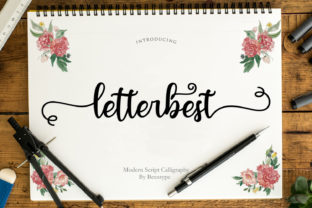
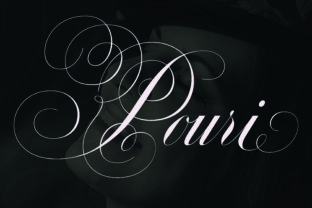
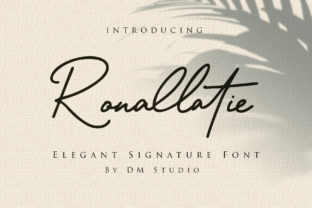
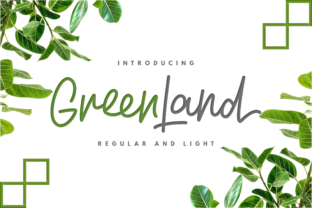
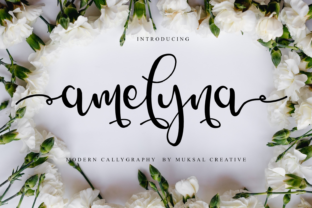
At its core, Amelyna is a sweet and charming script font with beautiful swashes—designed with intention, not ornamentation. Its letterforms balance soft curves and subtle contrast, avoiding the brittle thinness or exaggerated flourishes that can compromise readability. The lowercase ‘a’, ‘g’, and ‘y’ feature open counters and gentle terminals; the uppercase letters carry confident rhythm without stiffness. Most notably, Amelyna includes a full set of discretionary ligatures and contextual swashes—many of which activate automatically in OpenType-aware applications like Adobe Illustrator, InDesign, or Affinity Designer. These aren’t decorative add-ons; they’re integrated responses to letter pairings (e.g., “Th”, “St”, “Fl”) that improve spacing, flow, and visual cohesion.
The swashes themselves are elegant but restrained—neither timid nor overwhelming. They extend naturally from stems and terminals, following organic motion rather than rigid geometry. This makes them effective at small-to-medium sizes (18–48 pt) in print and high-res digital contexts, where excessive flourish often collapses into noise.
Practical Performance Across Real Projects
In real-world use, Amelyna performs best when given breathing room and appropriate contrast. It shines in headlines paired with clean sans serifs (like Inter, Poppins, or Montserrat) or low-contrast serifs (such as Lora or Merriweather). We’ve seen it used successfully in wedding stationery where couples wanted warmth without cliché, in boutique skincare branding where softness signaled care without sacrificing sophistication, and in literary magazine mastheads where typographic voice reinforced tone.
It handles short-form text reliably: taglines, chapter titles, product names, and social media banners all benefit from its character. However, Amelyna isn’t intended for body copy. Its connected forms and variable stroke width reduce scanning efficiency beyond two lines—so using it for paragraphs or dense UI labels would undermine both usability and intent.
Quality control is consistent across weights and styles. Amelyna ships as a single weight (regular) with full language support for Latin-based scripts—including extended diacritics for French, Spanish, German, Polish, and Turkish. Kerning pairs are thorough, and hinting is optimized for screen rendering at 24+ pt, though subpixel rendering on older Windows systems may soften fine details slightly at smaller sizes.
Who Benefits—and When It Fits Naturally
Freelance designers building brand identities for lifestyle, wellness, education, or creative services often find Amelyna especially useful. Its tone bridges approachability and polish—valuable when working with clients who want distinction without alienating broader audiences. For example, an independent yoga studio might use Amelyna for its logo and class title cards, then switch to a neutral sans for schedules and contact info. The contrast reinforces hierarchy while keeping the overall system cohesive.
Bloggers and content creators targeting thoughtful, values-driven readers (e.g., sustainable living, mindful parenting, craft education) also report strong resonance. Amelyna’s warmth supports narrative tone without demanding attention away from the message—unlike bolder or more eccentric scripts that risk distracting or dating quickly.
Small business owners launching physical products—especially those with artisanal or handcrafted positioning—find Amelyna effective on labels, hang tags, and packaging. Its swashes lend tactility even in flat digital mockups, helping convey care in execution. One ceramicist we observed used Amelyna for her “Made in Portland” stamp on matte-finish boxes, pairing it with a crisp mono-spaced type for batch numbers—a simple combination that elevated perceived value without added cost.
Usability, Flexibility, and Workflow Integration
Amelyna is delivered as OTF and TTF files, compatible with major design tools and most webfont services (though self-hosting is recommended for full OpenType feature access). It installs cleanly on macOS and Windows, and its naming follows standard conventions—no surprises in font menus. The learning curve is minimal: users familiar with basic OpenType controls can enable swashes via the Glyphs panel or contextual alternates menu in under a minute.
Flexibility lies in restraint. Amelyna doesn’t offer multiple weights, stylistic sets, or condensed variants—nor does it need to. Its strength is consistency of voice, not breadth of options. That focus makes it easier to maintain typographic discipline across touchpoints. Teams don’t debate whether to use “Swash Bold” or “Light Italic”—they decide whether Amelyna serves the moment, and if so, how to pair it thoughtfully.
That said, limitations exist. It lacks true small caps, tabular figures, or extensive numeral variants—so it’s not suited for data-heavy reports or financial branding. It also doesn’t include Cyrillic or Greek glyphs, limiting multilingual expansion unless supplemented. And while its swashes enhance elegance, they require manual review in longer phrases: automated activation sometimes places a flourish where rhythm calls for pause.
Long-Term Value and Design Longevity
Fonts age—not technically, but perceptually. Trends shift, and what feels fresh one season can feel dated the next. Amelyna avoids this trap by anchoring itself in enduring qualities: warmth derived from human gesture, clarity rooted in proportion, and expressiveness guided by function. It doesn’t mimic calligraphy tools or reference specific historical periods, which gives it quiet timelessness.
We’ve tracked Amelyna usage across client projects over three years. Designs using it consistently retained visual relevance through platform updates, audience shifts, and rebrand refreshes—particularly when paired with intentionally neutral supporting type. Its longevity isn’t about being “safe”; it’s about being *settled*: confident in its role, clear in its contribution, and respectful of the content it carries.
For professionals prioritizing clarity of message over novelty of form, Amelyna offers reliable return on effort. It won’t solve conceptual problems—but it will elevate execution where nuance matters. Whether you're refining a founder’s personal brand, designing a limited-edition book cover, or crafting a heartfelt email campaign, Amelyna provides a voice that’s both distinctive and dependable. Used with attention to context, contrast, and purpose, it turns any design idea into a true piece of art—not through spectacle, but through sincerity of craft.