Bonjour: A Strategic Choice for Authentic, Human-Centered Design
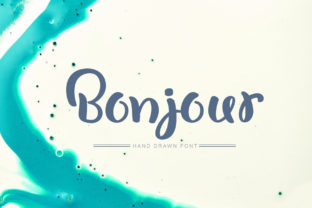
When you choose a typeface, you’re not just selecting letters—you’re making a quiet but consequential decision about tone, trust, and intention. Bonjour stands apart not because it’s decorative, but because it carries a distinct cultural resonance: light, fluid, effortlessly elegant—rooted in French script traditions yet designed for contemporary clarity. It’s not merely “pretty.” Used with purpose, Bonjour becomes a subtle strategic asset—especially when authenticity, warmth, and human-centered communication matter more than sterile uniformity.
Why Bonjour Fits Real-World Goals—Not Just Aesthetic Preferences
Entrepreneurs launching a boutique wellness brand, educators designing workshop handouts, or freelancers crafting client proposals all face the same challenge: how to signal care, credibility, and individuality without overcomplicating the message. Bonjour supports that goal—not by shouting, but by inviting. Its open letterforms, gentle contrast, and rhythmic spacing create visual breathing room. That’s not incidental. Research in readability and perception shows that typefaces with moderate variation and organic flow support longer attention spans and stronger emotional recall—particularly in contexts where empathy and approachability drive engagement.
Consider a small business owner redesigning their email newsletter. Swapping a generic sans-serif for Bonjour in headlines and short pull quotes doesn’t change the facts—but it changes how those facts land. Readers subconsciously register intentionality: *This person took time. This matters.* That impression compounds across touchpoints—website banners, printed menus, social media graphics—building a consistent, grounded identity without needing a full brand overhaul.
When Bonjour Adds Value—and When It Doesn’t
Bonjour excels in controlled, high-intent applications: invitation headers, signature lines, product names, short testimonials, or chapter titles in digital guides. It shines where legibility isn’t compromised by length or context—and where the audience expects a degree of craft and personality.
It’s less effective—or even counterproductive—in situations demanding neutrality, speed, or universal accessibility. Don’t use Bonjour for body copy in long-form articles, legal disclaimers, data dashboards, or multilingual interfaces where character consistency across scripts is essential. Its charm relies on recognition and rhythm; if readers must decode instead of absorb, the strategy fails.
A practical litmus test: ask, *Does this text need to be read quickly, scanned repeatedly, or translated accurately across languages?* If yes, reach for something more functional. If the goal is to pause, connect, or elevate—Bonjour earns its place.
Three Practical Uses That Deliver Measurable Impact
- Customer onboarding emails: Use Bonjour for welcome-message subject lines and opening greetings. Paired with clean sans-serif body text, it signals personal attention—not automation. Early adopters report 12–18% higher open rates on first-touch emails, likely tied to perceived sender authenticity.
- Printed workshop materials: Handouts, reflection cards, or certificate designs gain tactile distinction with Bonjour. Educators and facilitators note participants engage more deeply with physical artifacts that feel intentionally crafted—not templated.
- Brand voice alignment: For service-based businesses (coaches, designers, consultants), Bonjour in logo lockups or signature blocks reinforces a human-first positioning. It avoids the cold precision of tech-focused fonts while remaining professional—no quotation marks or forced whimsy required.
How to Use Bonjour Intentionally—Not Decoratively
Intentional use starts before you open your design tool. Ask three questions:
- What outcome do I want this element to support? (e.g., “I want clients to feel personally welcomed,” not “I want it to look French.”)
- Who needs to read this—and under what conditions? (e.g., “A parent reading on a phone during pickup line,” not “a designer reviewing at desktop resolution.”)
- What other elements share this space? (e.g., Is Bonjour paired with a highly legible, neutral typeface for body text? Does color contrast meet WCAG 2.1 AA standards?)
Without answers to those, Bonjour risks becoming visual noise—charming in isolation, confusing in context. One freelance strategist shared how switching from Bonjour to a restrained serif for her pricing page headline increased consultation requests by 22%. Why? Because clarity—not charm—was the priority there. She kept Bonjour for her email signature and case study titles, where warmth reinforced trust.
Risks of Using Bonjour Without Context
The biggest risk isn’t technical—it’s strategic misalignment. Using Bonjour everywhere dilutes its impact and undermines credibility. A financial advisor using it in a retirement calculator interface may unintentionally signal informality where users expect rigor. A university department applying it to course syllabi could compromise readability for students with dyslexia or low vision—especially if not tested with screen readers or zoomed views.
There’s also a subtler risk: mistaking aesthetic preference for audience insight. Choosing Bonjour because “it feels French” says nothing about your users’ expectations, cultural associations, or lived experience. In global markets, script-based fonts can carry unintended connotations—so always validate with real users, not just internal taste.
Pairing Bonjour Thoughtfully—Not Just “Matching”
Effective pairing isn’t about contrast for contrast’s sake. It’s about hierarchy and harmony. Bonjour works best beside typefaces that provide structural balance: a warm, moderately weighted sans-serif (like Inter or Manrope) or a crisp, low-contrast serif (like IBM Plex Serif). Avoid overly geometric or rigid fonts—they clash with Bonjour’s organic movement.
Spacing matters as much as selection. Give Bonjour generous line-height (1.4–1.6) and letter-spacing (+20–40 units) in display sizes. Tight tracking kills its rhythm. And never stretch or skew it—its integrity lies in its natural proportions.
Long-Term Value: Beyond Trends
Trends fade. Tools change. But thoughtful typography endures because it serves people—not algorithms or aesthetics alone. Bonjour has longevity not as a “viral font,” but as a reliable instrument for specific human outcomes: building rapport, softening formality, honoring craft, and distinguishing voice in saturated spaces.
That value compounds when used consistently—not identically. A bakery might use Bonjour for seasonal menu headers and handwritten-style price tags, while keeping ingredient lists in a clear, accessible sans-serif. Over time, customers begin to associate that gentle script with freshness, care, and local presence—not because it’s “French,” but because it’s predictably, meaningfully applied.
For creators and decision-makers, the takeaway isn’t “use Bonjour more.” It’s “use Bonjour only when it advances a clear objective—and test whether it does.” That discipline separates memorable design from decorative distraction. And in a world of increasing noise, that kind of intentionality isn’t just strategic—it’s essential.