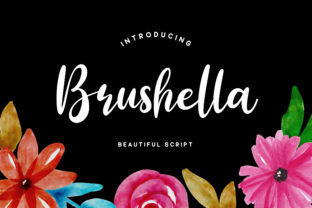
Brushella: A Delicate Script Font with Modern Authenticity
If you've ever spent minutes—sometimes hours—scrolling through font libraries searching for that one typeface that feels both fresh and timeless, Brushella might be the quiet moment of recognition you’ve been waiting for. It’s not loud or flashy. Instead, Brushella is a beautiful and delicate script font with an incredibly stunning look—fluid yet controlled, hand-crafted yet precise, elegant without pretension. Its modern authenticity comes from subtle irregularities: slight variations in stroke weight, gentle tapering on terminals, and organic spacing that mimics natural handwriting—but with the consistency needed for professional use.
Why Brushella Stands Out Among Script Fonts
Most script fonts fall into one of two categories: overly formal (think calligraphic flourishes better suited to wedding invitations) or too casual (loose, sketchy, and hard to read at small sizes). Brushella occupies a rare middle ground. Its lowercase ‘g’, ‘y’, and ‘f’ carry graceful descenders; its capitals have restrained swashes—present enough to add character, but never distracting. Unlike many brush scripts that rely heavily on ligatures to feel cohesive, Brushella works beautifully with standard character sets, making it highly compatible across platforms—from Canva and Figma to Adobe InDesign and even Google Docs via webfont embedding.
For Brand Builders Who Value Distinction Without Complexity
Small business owners launching a boutique skincare line, an independent jewelry maker, or a mindful wellness coach often need a visual identity that conveys care, craftsmanship, and calm confidence. Brushella supports that intention effortlessly. When used sparingly—as a logo lockup, headline treatment, or section divider—it adds warmth and humanity without sacrificing clarity. One Portland-based ceramicist replaced her generic sans-serif logo with Brushella set in all caps over a soft neutral background; customer feedback noted her site now “felt like stepping into her studio.” That’s not magic—it’s typography aligning with voice and values.
For Content Creators Seeking Visual Rhythm
Bloggers, educators, and newsletter writers know how much tone matters—not just in words, but in layout. Brushella excels in short-form emphasis: pull quotes, chapter titles in digital workbooks, or featured testimonials. Because its x-height is generous and letterforms open, it remains legible even at 18–24px on screen—unlike many delicate scripts that vanish into blur at smaller sizes. A freelance writing instructor uses Brushella for weekly lesson headers in her Notion course dashboard. Students report improved navigation and a stronger sense of progression—not because Brushella “teaches,” but because it creates visual hierarchy that supports learning flow.
Where Brushella Fits—and Where It Doesn’t
Brushella shines brightest where personality and polish coexist: packaging copy, editorial features, social media graphics, presentation slides, and branded PDFs. It pairs naturally with clean, neutral sans-serifs like Inter, Lato, or Manrope—creating contrast without competition. Use Brushella for the “voice,” and a supporting sans-serif for the “information.” This pairing works especially well for service-based professionals who want their expertise to feel approachable, not austere.
That said, Brushella isn’t designed for body text, data tables, or interfaces requiring rapid scanning. Its charm lies in intentionality—not ubiquity. If your project demands high readability at small sizes across multiple devices (e.g., a government resource portal or medical intake form), a humanist sans-serif remains the more responsible choice. Likewise, while Brushella includes multilingual support for Western European languages, users working with extended Cyrillic, Arabic, or East Asian scripts will need complementary typefaces. Knowing this upfront saves time and avoids last-minute redesigns.
Practical Tips for Getting the Most From Brushella
- Start small: Apply Brushella to one high-impact element first—your logo, hero headline, or email subject line—then assess how it shapes perception before expanding usage.
- Respect its rhythm: Avoid tight tracking. Let letters breathe. Brushella’s elegance emerges when spacing reflects its handmade origin—not mechanical uniformity.
- Test color contrast: Its fine strokes can fade against light grays or busy backgrounds. Use tools like WebAIM’s Contrast Checker to ensure accessibility compliance, especially for digital use.
- Consider licensing early: Brushella is available through reputable foundries with clear desktop, web, and app licensing options. Verify usage rights match your distribution channels—especially if embedding in client deliverables or SaaS products.
Who Benefits Most—and Why It’s Worth Their Time
Freelancers juggling multiple clients appreciate Brushella because it helps them differentiate offerings quickly: a single font swap can shift a brand from “corporate consultant” to “thoughtful strategist.” Marketers building seasonal campaigns find its versatility valuable—Brushella adapts equally well to spring botanical themes and autumnal artisanal storytelling. Educators designing printable resources notice students engage more deeply with materials that feel intentionally crafted—not templated.
Even hobbyists benefit. A retired teacher creating illustrated poetry chapbooks chose Brushella for title pages and epigraphs. She didn’t need advanced design skills—just the ability to select a font that honored the quiet dignity of her words. That’s the quiet power of Brushella: it doesn’t demand attention; it invites presence.
A Note on Authenticity in Practice
“Modern authenticity” isn’t just marketing language—it’s measurable in how people respond. When Brushella appears in a context that matches its character (a handwritten-style invitation, a curated Instagram carousel, a minimalist product label), viewers subconsciously register coherence: the font, message, and medium reinforce one another. That alignment builds trust faster than any tagline. But authenticity also means using Brushella honestly—not as a shortcut to “look creative,” but as a considered tool aligned with purpose. Overuse dilutes impact; thoughtful application deepens resonance.
Brushella won’t solve branding strategy gaps or replace strong writing. What it does offer is a refined, reliable way to express nuance—to signal care in execution, respect for craft, and confidence in simplicity. For professionals who understand that details shape perception, Brushella is less of a decorative choice and more of a quiet collaborator—one that elevates intention without overshadowing it.