Flower for Rosalline: The Stylish Expressive Script Font Redefining Romantic Typography in Modern Creative Work
Typography is no longer just about legibility—it’s a strategic layer of brand voice, emotional resonance, and visual storytelling. In this context, Flower for Rosalline has emerged not as a passing trend, but as a purpose-built expressive script font designed to meet the evolving demands of professionals who craft meaning through design. More than ornamental flair, it’s a stylistically coherent, technically refined tool that bridges craftsmanship and digital efficiency—making it especially valuable for creators, entrepreneurs, and marketers seeking authenticity without sacrificing polish.
What Is Flower for Rosalline?
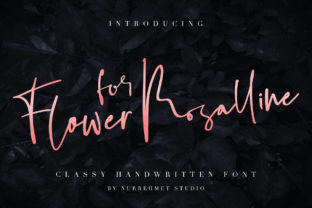
Flower for Rosalline is a stylish expressive script font characterized by its graceful, hand-drawn rhythm, subtle contrast, and romantic sensibility. Each glyph flows with intentional variation—slight swashes, delicate terminals, and organic stroke modulation—that evokes the warmth of calligraphy while maintaining crisp digital rendering. Unlike many decorative scripts that sacrifice readability at smaller sizes or in UI contexts, Flower for Rosalline was engineered with balanced x-height, open counters, and consistent spacing—enabling confident use across print, web, and social media assets.
It is not a revival or imitation of historical scripts; rather, it reflects a contemporary reinterpretation—one where elegance is intentional, not inherited. Its name hints at both botanical softness (“Flower”) and personal resonance (“Rosalline,” suggesting individuality and narrative)—a duality mirrored in its application: equally at home on a wedding invitation and a boutique skincare label.
Why It Fits Within Today’s Creative and Commercial Landscape
The rise of Flower for Rosalline aligns with several converging industry shifts. First, there’s a broader movement toward human-centered design—a response to algorithmic uniformity and AI-generated sterility. Consumers increasingly favor brands that signal care, intentionality, and tactile authenticity. A font like Flower for Rosalline delivers that signal instantly: its curves suggest thoughtfulness; its rhythm implies time taken, not optimized away.
Second, creative workflows have become more distributed and iterative. Designers, marketers, and founders often move between Figma, Canva, Adobe Creative Cloud, and no-code platforms. Flower for Rosalline supports OpenType features—including contextual alternates and ligatures—that activate automatically in professional environments, enabling dynamic typographic expression without manual intervention. This responsiveness makes it practical—not just pretty—for teams managing rapid content cycles.
Third, the growth of micro-brands and creator-led businesses has intensified demand for distinctive yet scalable visual identities. A single expressive font can serve as a unifying element across packaging, email headers, Instagram Stories, and product labels. Flower for Rosalline offers enough personality to stand out in crowded feeds, yet enough structural integrity to scale cohesively—from 12px caption text (with careful hierarchy) to 120px hero banners.
Real-World Applications Across Professions
Consider how different professionals integrate Flower for Rosalline into their daily work:
- Freelance designers use it to elevate client presentations—applying it selectively to section headers, quote pulls, or signature lines—creating moments of visual pause amid dense layouts.
- E-commerce entrepreneurs deploy it in limited, high-impact contexts: product name treatments on Shopify banners, handwritten-style thank-you notes embedded in post-purchase emails, or custom monogram options for personalized goods.
- Content marketers incorporate it into lead magnets—think beautifully typeset PDF guides or printable planners—where aesthetic cohesion increases perceived value and shareability.
- Wedding and event professionals rely on its romantic tone for save-the-dates, ceremony programs, and signage—leveraging its built-in swash variants to create unique combinations per couple, without custom lettering commissions.
Importantly, these uses avoid overloading the font. Its strength lies in restraint: one expressive script paired with a clean sans-serif body font creates contrast that feels intentional, not chaotic. That balance reflects a maturing understanding of typography—not as decoration, but as functional hierarchy.
Shifting Expectations: Why Expressiveness Now Matters More Than Ever
Five years ago, many brands prioritized speed and scalability above all—favoring system fonts or ultra-flexible variable typefaces. Today, that calculus is shifting. Research from the Design Management Institute shows that brands investing in distinctive, emotionally resonant typography see higher recall rates (+27%) and stronger perceived differentiation in saturated markets. Consumers don’t just read words—they register tone before cognition kicks in. A script font like Flower for Rosalline communicates warmth, care, and attention to detail in under two seconds.
This shift is also tied to changing audience expectations around sustainability and craft. As shoppers seek out small-batch producers, handmade goods, and transparent sourcing, they respond positively to visual cues that mirror those values. A digitally rendered—but unmistakably human-feeling—script signals alignment with those ideals. It doesn’t pretend to be analog, but it honors analog intention.
Technologically, this is now feasible at scale. Variable font support, improved web font loading strategies (like font-display: swap), and tighter integration between design tools and CMS platforms mean expressive typography no longer carries the performance or compatibility penalties it once did. Flower for Rosalline ships in modern WOFF2 format with optimized hinting, ensuring fast load times and crisp rendering across devices—making romantic typography operationally viable, not just aspirational.
Workflow Integration: Beyond Aesthetic Choice
For teams adopting Flower for Rosalline, implementation goes beyond selecting a font family. It involves thoughtful pairing, controlled usage, and consistent documentation. Leading studios now include it in their design system guidelines—not as a “fun” option, but as a defined voice component:
- Primary use case: Headlines, logos, and short-form emphasis (under 8 words).
- Pairing standard: Always with a neutral, highly legible sans-serif (e.g., Inter, Poppins, or Manrope) for body copy and UI elements.
- Accessibility note: Never used for long paragraphs or critical interface text—maintaining WCAG AA compliance through clear typographic hierarchy.
- Brand extension: Swash variants reserved for premium touchpoints (e.g., limited-edition packaging, VIP welcome emails).
This structured approach transforms Flower for Rosalline from a stylistic flourish into a measurable part of brand equity—trackable through engagement metrics on assets that use it versus those that don’t.
Looking Ahead: Typography as Intentional Infrastructure
As generative tools accelerate production, the value of human-crafted type continues to rise—not as nostalgia, but as infrastructure for meaning. Flower for Rosalline represents a new category: expressive fonts built for real-world constraints, not just aesthetic galleries. Its relevance grows alongside demand for authenticity, cross-platform consistency, and emotionally intelligent communication.
For professionals navigating complex creative ecosystems, choosing a font is rarely just about aesthetics. It’s about signaling values, streamlining collaboration, and future-proofing visual language. Flower for Rosalline meets that responsibility with precision: romantic without being saccharine, expressive without sacrificing clarity, and distinctly crafted—yet universally deployable.
In an era where attention is fragmented and trust is earned through nuance, typography remains one of the most accessible, scalable, and human ways to say: We made this with care—and we want you to feel it.