Greyfox: The Brush Font That Turns Everyday Designs Into Unforgettable Moments
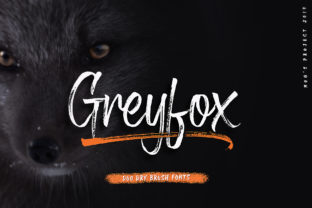
Greyfox isn’t just another script font—it’s a confident, expressive brush typeface with organic flow, subtle texture, and that effortless coolness you can’t fake. Think of it as the handwritten note from your most creatively assured friend: relaxed but intentional, casual but polished. Its strokes carry gentle variation—thick downstrokes, airy upstrokes, and soft tapered ends—that mimic real brushwork without looking overly stylized or dated. That balance is why designers, small business owners, educators, and even DIY enthusiasts reach for Greyfox when they need warmth, personality, and visual distinction—fast.
Where Greyfox Fits Naturally (and Why It Stands Out)
Greyfox shines brightest where authenticity matters more than perfection—and where first impressions happen in under three seconds. It’s not built for dense paragraphs or legal disclaimers. Instead, it thrives in moments that invite attention, evoke feeling, or signal care.
Small Businesses Building Real Connection
A local coffee roaster launching seasonal blends? Greyfox on a hand-stamped bag label adds tactile charm that generic sans-serifs can’t replicate. A boutique florist designing Instagram Stories for new arrangements? Greyfox over a soft-focus photo of peonies feels personal—not promotional. Even service-based professionals like yoga instructors or freelance editors use Greyfox in email headers or workshop invites to quietly communicate calm confidence and human-centered values. It signals: *This isn’t automated. This is made with thought.*
Creative Freelancers & Designers Who Need Speed + Soul
If you’ve ever spent 47 minutes toggling between script fonts trying to land “just right,” Greyfox cuts that friction. Its letterforms are legible at medium sizes, kerning is intuitive, and OpenType features (like alternate characters and ligatures) offer subtle polish without requiring deep typography knowledge. Use it for logo lockups where the brand name benefits from rhythm and character—think “Wildfolk Studio” or “Haven Books.” Pair it with a clean, neutral sans-serif (like Inter or Poppins) for body text, and you’ve got contrast that breathes, not competes.
Educators, Coaches, and Community Builders
Greyfox works beautifully in learning environments where approachability lowers barriers. A mindfulness coach might use it for weekly reflection prompts shared via PDF. A high school art teacher could apply it to classroom posters about creative risk-taking—its fluidity subtly reinforces the message. Nonprofits running awareness campaigns often find Greyfox strikes the right tone: compassionate but not saccharine, grounded but not stiff. One literacy nonprofit reported higher engagement on social graphics featuring Greyfox headlines versus standard display fonts—readers paused longer, scrolled less, and clicked through more consistently.
Real Scenarios Where Greyfox Makes a Tangible Difference
- Wedding stationery: Invitations, menu cards, or signage gain quiet elegance—especially when printed on textured cotton paper. Greyfox avoids the “cutesy” trap of many brush fonts while still feeling celebratory and handmade.
- Podcast cover art: For narrative-driven or interview-based shows, Greyfox conveys voice and intimacy better than rigid geometric fonts. It says, “You’ll hear real people, real stories.”
- Product packaging for artisan goods: Small-batch soaps, hot sauces, or ceramic mugs benefit from Greyfox’s warmth. It complements photography of raw materials and hands-on making—without shouting.
- Personal branding assets: LinkedIn banner headers, portfolio hero sections, or even signature blocks in email signatures feel more memorable and human with Greyfox used sparingly and intentionally.
What to Keep in Mind Before You Reach for Greyfox
Like any expressive tool, Greyfox works best when matched to purpose—not just preference. Here’s what seasoned users notice:
Legibility at Smaller Sizes
Greyfox is highly readable at 24pt and above—ideal for headlines, quotes, logos, and short labels. Below 18pt, especially in digital interfaces or tight layouts, some letters (like lowercase a, e, or s) begin to soften visually. If your design requires sub-16pt text, consider using Greyfox only for key words and pairing with a highly legible companion font for supporting copy.
Medium Matters
It sings on print—especially uncoated or recycled papers that let its texture breathe. On screens, ensure sufficient contrast (dark Greyfox on light backgrounds, or vice versa) and avoid thin weight variants in low-resolution displays. Some users report slightly less crisp rendering on older Android devices, so always test on target platforms if mobile visibility is critical.
Brand Voice Alignment
Greyfox carries an inherent vibe: relaxed, artistic, thoughtful, and quietly confident. It may feel misaligned for industries demanding strict authority or clinical precision—think enterprise SaaS dashboards, pharmaceutical compliance docs, or military training manuals. That’s not a flaw—it’s clarity. Ask yourself: *Does this project benefit from warmth and humanity—or does it require neutrality or rigor?*
Who Gets the Most Out of Greyfox (and How They Use It Differently)
A graphic designer building a brand identity for a sustainable skincare line might use Greyfox for the wordmark and product names—but switch to a minimalist sans-serif for ingredient lists and certifications. A wedding planner uses it across all client-facing PDFs (timelines, vendor contacts, welcome guides) to create consistent, calming visual continuity. A university communications team applied Greyfox to a series of student spotlight posters—resulting in a 30% increase in social shares compared to previous typographic treatments.
The common thread? Greyfox isn’t chosen to be decorative. It’s chosen to reinforce intention—to make “handmade,” “human,” or “thoughtfully crafted” visible before a single word is read.
Final Thought: It’s Not About the Font—It’s About the Feeling
You don’t pick Greyfox because it has the most alternates or the widest language support (though it does support Latin-based languages well). You pick it because it helps your audience *feel* something specific—welcomed, inspired, reassured, or intrigued—before they even process the message. That emotional resonance is hard to engineer. But with Greyfox, it’s built in.