Itze: A Vibrant Mexican-Inspired Color Font
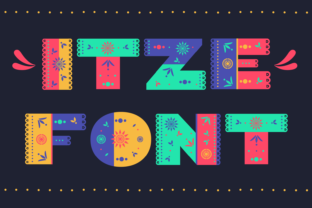
If you've ever struggled to add authentic cultural texture to a design without layering graphics, masks, or manual color fills—Itze changes the game. It’s not just another decorative typeface. Itze is a thoughtfully crafted color font rooted in visual motifs from Mexican folk art, hand-painted signage, papel picado patterns, and warm, sun-drenched palettes. Designed for immediacy and expressive impact, it delivers layered color, depth, and personality straight from the glyph—no extra steps required.
What Makes Itze Different From Standard Fonts?
Unlike traditional OpenType fonts (TTF or standard OTF), Itze is an OpenType-SVG color font. That means each character contains embedded vector-based color information—not just outlines. When you type “Fiesta” in Itze, you’re not applying a swatch or effect; the letters themselves render with intentional gradients, textures, and chromatic harmony built right in.
Itze ships in three distinct weights: Color, Regular, and Light. The Color variant is where the magic lives—fully saturated, multi-hued glyphs ideal for headlines, social banners, or packaging accents. Regular and Light offer monochrome alternatives that retain the same rhythmic curves and cultural inflection, giving you flexibility across contexts where full color isn’t practical—or where you want to pair Itze with other typefaces cleanly.
Where Itze Fits Into Real Creative Workflows
Designers using Adobe Photoshop or Illustrator will find Itze intuitive: install the OTF file, select it in your font menu, and start typing. The color renders natively—no plugins or workarounds. In Inkscape, Itze works reliably when imported as SVG text (though raster preview may vary slightly depending on version). Silhouette Studio users can use Itze for on-screen layout and print-ready projects—but note: it won’t cut as a color font. You’ll need to outline and manually separate layers if cutting is part of your process.
Here’s where Itze shines in practice:
- Branding for food trucks, cafés, or boutique retailers—a single word like “Taco” or “Mercado” in Itze Color instantly signals warmth, authenticity, and local flavor.
- Educational posters or classroom decor—teachers use Itze Regular to label bilingual word walls or cultural timelines, reinforcing visual literacy while honoring heritage.
- Digital marketing assets—Instagram story headers, email subject lines, or Canva social templates gain standout presence without relying on stock graphics.
- Publishing and zine design—independent authors and small presses use Itze Light for chapter titles or section dividers that feel handmade but scale cleanly across print and PDF.
What Itze Doesn’t Do (And Why That Matters)
Itze is not compatible with Cricut Design Space. Its OTF and TTF files won’t load or render correctly there—not because of a flaw, but due to how Cricut handles font rendering (it doesn’t support OpenType-SVG). If your workflow includes vinyl cutting, heat transfer, or physical crafting via Cricut, plan accordingly: either use Itze for screen-based mockups only, or convert glyphs to outlines in Illustrator first and re-color manually before importing.
This limitation isn’t a drawback—it’s a signal of intentionality. Itze was built for digital-first, high-fidelity expression, not universal device compatibility. Knowing this upfront saves time, avoids frustration, and helps you choose the right tool for the job.
Practical Tips for Getting the Most From Itze
Start simple. Try Itze Color at 48–72 pt for a headline over a neutral background. Let the font breathe—its details thrive with space. Avoid pairing it with overly busy sans-serifs or rigid geometric fonts; instead, try it alongside a relaxed serif like Playfair Display or a warm humanist sans like Quicksand.
In branding, treat Itze as an accent—not your entire identity system. Use Itze Color for logos or hero text, then switch to Itze Regular or Light for subheads and captions. This creates hierarchy while keeping cultural resonance consistent.
For accessibility: while Itze is visually rich, remember that color alone shouldn’t convey meaning. If using Itze Color in web interfaces or presentations, ensure contrast meets WCAG guidelines (especially against light backgrounds), and supplement with clear typography structure or supporting icons where needed.
Why Cultural Authenticity Matters in Type Design
Itze doesn’t appropriate—it honors. Every curve, stroke weight variation, and hue choice reflects real visual traditions: the bold symmetry of Oaxacan woodcarvings, the playful asymmetry of street murals in Guadalajara, the rhythmic repetition found in textile borders. That grounding makes Itze more than stylistic flair—it becomes a quiet act of representation.
Freelancers pitching to Latinx-owned businesses often find Itze resonates immediately—not as a gimmick, but as shared visual language. Educators report students engage more deeply with history or literature units when Itze appears in handouts alongside primary sources or oral histories. Even marketers notice higher click-through rates on Itze-powered ads targeting culturally connected audiences—likely because the font feels familiar, trusted, and human.
A Note on Licensing and Implementation
Itze is licensed for both personal and commercial use—including client work, merchandise, and digital products—as long as you’re using the official files from the source. No need to purchase extended licenses for most common applications. However, if you’re embedding Itze into software, apps, or SaaS platforms, double-check the license terms—you’ll likely need a custom agreement.
Installation is straightforward on Mac and Windows. Just double-click the OTF file and hit “Install.” On some newer versions of Illustrator or Photoshop, you may need to enable “SVG Fonts” in Preferences > Type (look for “Enable SVG Fonts” or similar). If color doesn’t appear right away, restart the app—this resolves 95% of display hiccups.
Final Thought: Choose Tools That Carry Meaning
Type isn’t neutral. Every font carries tone, context, and unspoken associations. Itze invites you to bring intention—not just aesthetics—to your next project. Whether you’re designing a festival poster, launching a new product line, or creating learning materials for bilingual learners, Itze offers more than visual interest. It offers resonance.
Use it where color, culture, and clarity converge. Skip the workarounds. Skip the compromises. And when in doubt—type one word, step back, and ask: does this feel true?