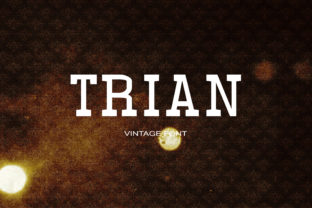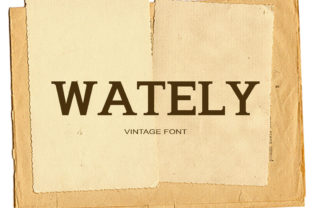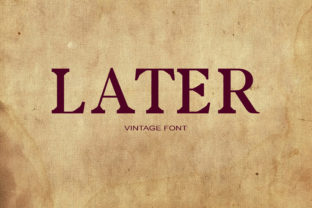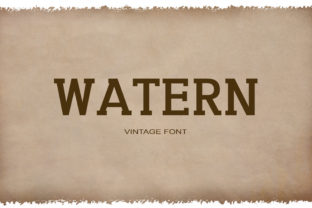
Watern: The Vintage Serif Font That Brings Authentic Western Style to Life
When you're designing a project rooted in the spirit of the American West—whether it's a rustic café menu, a hand-printed concert poster for a bluegrass festival, or a boutique brand identity for handmade leather goods—you need typography that doesn’t just look good, but feels true. That’s where Watern comes in. Watern is a carefully crafted vintage serif font inspired by mid-20th-century Western lettering—think weathered saloon signs, classic rodeo flyers, and hand-painted diner marquees. It’s not a novelty typeface with exaggerated gimmicks; it’s a functional, expressive, and deeply evocative serif designed to lend authenticity, warmth, and narrative weight to your work.
Many designers and small business owners face a common challenge: finding a typeface that balances visual impact with legibility—and does so without veering into cliché. Generic “cowboy fonts” often rely on overused embellishments like spur dots, rope borders, or forced distressing. These can distract, date quickly, or undermine credibility. What users actually need is a versatile, professional-grade serif that carries Western character organically—something that works equally well at 12 pt in a printed program or blown up across a 48-inch barn door sign. Watern meets that need by grounding its design in historical letterforms while maintaining clean spacing, consistent stroke contrast, and thoughtful OpenType features—including stylistic alternates and ligatures—that add subtle nuance without sacrificing usability.
How Watern Solves Real Design Challenges
Let’s be practical: You’re not choosing a font just to check a box. You’re solving for tone, audience connection, and clarity of message. Watern helps in three key ways:
- It builds instant atmosphere without overselling. Unlike fonts that scream “WESTERN!” with every glyph, Watern uses restrained serifs, slightly flared terminals, and gentle irregularity to suggest heritage—not parody. This makes it ideal for brands aiming for sophistication with soul: think artisanal whiskey labels, indie Western wear boutiques, or heritage tourism campaigns.
- It performs reliably across media. Whether you’re exporting a PDF for print, generating web-ready SVG icons, or prepping files for vinyl cutting, Watern’s robust outlines and generous x-height ensure readability at any scale. Its lowercase ‘a’, ‘g’, and ‘y’ are open and distinct—critical for body text in event programs or packaging copy.
- It pairs thoughtfully with modern companions. Watern shines brightest when paired with clean, neutral sans-serifs (like Inter, Poppins, or even Helvetica Neue) for supporting text. This contrast creates visual hierarchy while keeping the overall aesthetic grounded—not costumed.
Practical Applications You Can Use Today
You don’t need a full rebrand to benefit from Watern. Start small, test intentionally, and scale up as confidence grows:
- Menus & signage for food and beverage businesses: A coffee roaster named “Coyote Hollow” could use Watern for its shop name and seasonal drink titles, then switch to a light sans-serif for ingredients and descriptions. The result? Warmth and place-based storytelling—without compromising scannability.
- Event branding for music, film, or festivals: For a documentary screening about Navajo code talkers or a country-folk music series, Watern adds gravitas to titles and speaker names—especially in bold or semi-bold weights—while letting photography and color carry emotional weight.
- Packaging and product labeling: Small-batch makers—soap artisans, hot sauce producers, candle studios—use Watern on front labels to signal craftsmanship and regional pride. Its slight imperfection feels human-made, aligning perfectly with values-driven marketing.
- Digital interfaces with intention: While Watern isn’t intended for long-form UI text, it works beautifully in hero sections, email headers, or limited-button contexts (e.g., “Saddle Up” or “Ride On”) where voice matters more than volume.
Tailoring Watern to Your Role and Goals
How you apply Watern depends on who you are—and what you’re trying to achieve:
If you’re a solo designer or freelancer: Keep Watern in your go-to “authenticity toolkit.” Use it selectively—for logotype, headlines, or signature elements—to elevate client work without overdesigning. Its versatility means one license serves multiple projects across industries: apparel, hospitality, publishing, and local government heritage initiatives alike.
If you run a small business or creative studio: Consider Watern part of your brand’s sensory language—alongside texture, palette, and photography style. Test it in A/B variations on social banners or landing pages. You’ll likely find it increases dwell time and perceived quality, especially among audiences aged 35–65 who respond to tactile, nostalgic cues.
If you’re a marketer or content creator: Don’t treat Watern as decoration. Treat it as punctuation—with meaning. A headline in Watern tells your audience, “This story matters. This place has history. This product was made with care.” That subtext strengthens messaging before a single word is read.
Key Considerations Before You Implement
Watern isn’t right for every context—and recognizing its limits is part of using it well:
- Avoid overuse in body copy. Its personality is strongest at larger sizes. Stick to 14 pt and above for display use; reserve smaller text for highly legible companions.
- Test contrast and accessibility. Watern’s medium weight has excellent contrast against light backgrounds—but always verify WCAG AA compliance for foreground/background combinations, especially in digital formats.
- Respect cultural context. When working with Indigenous, Mexican-American, or other Southwest traditions, pair Watern with sensitivity and collaboration—not appropriation. Let it support narratives led by those communities, not stand in for them.
- Licensing matters. Watern is typically available under desktop, web, and app licenses. Make sure your intended use (e.g., embedding in a mobile app or selling merchandise with Watern-based designs) matches the license terms—most foundries offer clear, scalable options.
In the end, Watern succeeds because it answers a quiet but persistent need: the desire to communicate with honesty, place, and presence. It doesn’t shout. It stands steady—like a well-built fence post, like a worn leather saddle, like a story told around a campfire just right. Whether you’re launching a new brand, refreshing an old one, or crafting a one-off piece that needs to resonate deeply, Watern offers more than aesthetics. It offers alignment—between your vision, your audience’s expectations, and the enduring power of thoughtful design. And in a world saturated with generic visuals, that kind of alignment isn’t just useful. It’s essential.