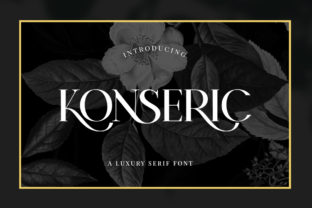
Konseric: A Sophisticated Serif for Editorial Elegance
Konseric is a carefully crafted serif typeface that balances timeless tradition with modern refinement. It’s not just another elegant font—it has presence, rhythm, and quiet confidence. If you’ve ever admired the polished clarity of a high-end magazine spread, a thoughtfully designed book cover, or a brand identity that feels both authoritative and approachable, you’ve likely seen the kind of visual language Konseric embodies.
What Makes Konseric Stand Out
At its core, Konseric is a serif font built for readability and character. Its letterforms feature subtle contrast between thick and thin strokes, gently flared serifs, and generous x-heights—making it highly legible even at smaller sizes. Unlike some serifs that lean heavily into either old-style formality or geometric minimalism, Konseric occupies a graceful middle ground. It’s warm enough for storytelling, structured enough for professionalism, and distinctive enough to leave an impression.
The “editorial look” often associated with Konseric isn’t accidental. Its spacing, weight distribution, and typographic texture were developed with long-form reading in mind—think magazine articles, literary journals, or well-crafted newsletters. But don’t mistake editorial elegance for exclusivity. Konseric works just as well on a small business website, a course syllabus, or a handmade product label.
Where Konseric Fits Into Real-Life Projects
Whether you're launching a personal blog, designing a client’s brand identity, or preparing classroom materials, Konseric adapts without losing its voice. Here are a few grounded examples:
- A freelance writer uses Konseric for their portfolio site’s body text—readers notice how easy it is to scroll through long project descriptions without eye strain.
- An indie bookstore selects Konseric for its seasonal newsletter headers and event posters. The font’s refined yet friendly tone mirrors the shop’s curated, community-focused vibe.
- A university lecturer applies Konseric to lecture slides and handouts. Students consistently comment that the material “feels more intentional” and easier to absorb.
- A small skincare brand pairs Konseric with a clean sans-serif for packaging. The serif adds sophistication to ingredient lists and origin stories, while keeping things grounded—not pretentious.
It’s also a smart choice for digital interfaces where clarity matters: dashboard labels, email subject lines, or even subtle UI elements like form field hints. Because Konseric renders cleanly across devices and platforms, it supports accessibility goals without sacrificing style.
Why People Choose Konseric (and When They Might Look Elsewhere)
Most users turn to Konseric when they want typography that communicates care—care in craft, in message, and in audience experience. It signals that what’s being shared matters, whether it’s a heartfelt essay, a service agreement, or a recipe card.
That said, Konseric isn’t always the best fit—and that’s okay. If your project demands high-impact display text at massive scale (like stadium signage), or needs ultra-narrow widths for tight layouts, other fonts may serve better. Similarly, if your brand voice is intentionally playful, futuristic, or aggressively minimalist, Konseric’s thoughtful elegance might feel misaligned.
Another practical note: Konseric shines most when given room to breathe. Tight line spacing or cramped margins can mute its strengths. Pairing it thoughtfully—say, with a neutral sans-serif for headings or captions—helps it stand out without overwhelming.
Getting Started Is Simpler Than You Think
You don’t need design experience to use Konseric well. Start by asking two questions:
- What’s the main thing I want people to feel or understand? If it’s trust, depth, or quiet authority, Konseric is likely a strong candidate.
- Where will this text live? On screen? In print? At a distance or up close? Konseric performs reliably across contexts—but testing at actual size and resolution helps avoid surprises.
Try using it for one focused element first: a headline, a pull quote, or a signature section of your website. Notice how it changes the tone—not dramatically, but meaningfully. That’s the sign it’s working.
Small Details That Make a Difference
Because Konseric is designed with editorial precision, little details matter. Its italics aren’t just slanted versions of the roman—they’re redrawn for flow and distinction, ideal for emphasis or citations. The numerals include both proportional and tabular options, so financial data or timelines stay aligned and readable. Even punctuation marks are tuned for balance: quotation marks sit comfortably beside letters, colons and semicolons align cleanly with baselines, and dashes carry appropriate weight.
These aren’t features you’ll always notice outright—but they add up. Over time, they contribute to a sense of cohesion and polish that readers respond to, even if they can’t name why.
Before You Commit
If you’re evaluating Konseric for a project, take a moment to preview it with your actual content—not placeholder text. Try a paragraph of your own writing, especially if it includes numbers, punctuation, or mixed casing (like acronyms or proper nouns). See how it handles your real-world usage.
Also consider licensing. Konseric is typically available through reputable foundries and font marketplaces, with clear terms for web, desktop, and app use. Make sure the license matches your intended deployment—especially if you’re building something for clients or commercial distribution.
Finally, remember that great typography isn’t about perfection—it’s about intention. Konseric gives you a strong, expressive tool. How you use it—with attention to hierarchy, whitespace, and context—is what brings it to life.