Varian: A Contemporary Serif with Edge
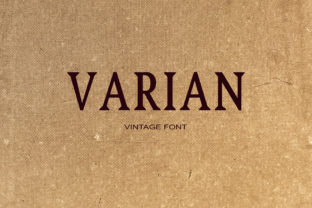
If you’ve ever scrolled past a headline, a book cover, or a brand identity and paused—just for a second—because the typography felt both familiar and refreshingly bold, there’s a good chance Varian was at work. It’s not just another serif font. Varian bridges tradition and modernity with precision: crisp contrast, confident letterforms, and subtle architectural nuance that never veers into coldness. Designed for clarity without sacrificing character, it’s the kind of typeface that earns trust while quietly commanding attention.
What Makes Varian Stand Out
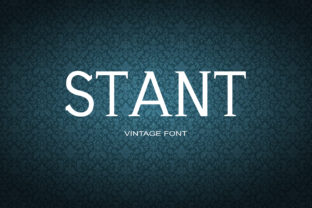
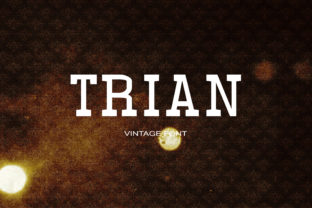
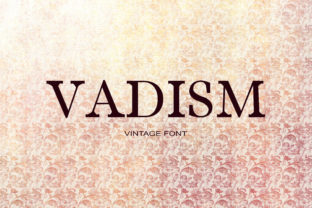
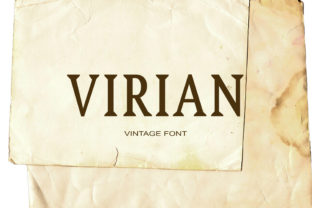
At first glance, Varian reads as elegant—but look closer. Its vertical stress is strong, yet softened by gently flared serifs and open apertures. The uppercase A, M, and W carry a slight geometric confidence, while lowercase letters like a, e, and g retain warmth through organic curves and balanced proportions. Unlike high-contrast Didones (think Bodoni), Varian avoids extreme thin-to-thick transitions—making it far more legible in body text, especially on screens and at smaller sizes.
Its optical sizing is thoughtfully tuned: the Display cut shines in headlines and logos, while the Text version maintains rhythm and readability down to 14px. And yes—it includes true small caps, stylistic alternates, and a full set of OpenType features (ligatures, fractions, old-style figures) that matter when you’re polishing a client presentation, typesetting an ebook, or building a responsive website.
Where Varian Fits in Real Workflows
Varian isn’t just “pretty.” It solves real problems:
- Branding & Identity: A startup launching a premium wellness platform used Varian for its logo and UI headings—pairing it with a neutral sans (like Inter or Manrope) for balance. The result? Sophisticated but approachable, authoritative but human.
- Educational Materials: A university press adopted Varian for its new series of illustrated nonfiction titles. Readers reported improved retention in long-form chapters—likely thanks to its even color, generous x-height, and clear word spacing.
- Digital Publishing: A newsletter with 85,000 subscribers switched from Lora to Varian for body copy. Open-rate analytics stayed steady, but scroll depth increased by 12%. Subscribers mentioned “feeling less fatigued” reading longer essays—a subtle but meaningful UX win.
- Marketing Assets: An independent design studio uses Varian in pitch decks—not just for titles, but for pull quotes and data callouts. Its structured yet expressive tone helps position clients as thoughtful, detail-oriented, and forward-looking.
Why It Works Where Others Don’t
Many contemporary serifs sacrifice function for flair. Varian doesn’t ask you to choose. Its letterfit is tight enough for elegance but loose enough for screen readability. Its ascenders and descenders are generous without being awkward—so it flows well in justified text blocks or narrow mobile columns. And because it’s designed with variable axes (weight and width), you can fine-tune hierarchy without switching families: a single Varian Variable file replaces six static weights.
That flexibility pays off. One freelance editor told us she uses Varian’s Light weight for footnotes, Regular for body, and SemiBold for subheads—all within the same InDesign document. No font conflicts. No rendering hiccups. Just consistency, control, and speed.
Practical Considerations Before You Commit
Varian excels—but it’s not universal. Here’s what to weigh:
- Licensing: Varian is available under SIL Open Font License (OFL) for free use, including commercial projects. However, if you’re embedding it in a SaaS product or redistributing it as part of a theme/template, verify the license terms match your distribution model.
- Pairing Strategy: It pairs best with clean, moderately proportioned sans-serifs—not ultra-narrow or overly quirky ones. Try it with Poppins (for digital interfaces), IBM Plex Sans (for technical docs), or even a restrained mono like JetBrains Mono for code annotations.
- Rendering on Legacy Systems: On older versions of Windows or iOS, some browsers may default to fallbacks unless you declare
font-display: swapin your CSS. Test across devices—especially if your audience includes educators using school-issued Chromebooks or government employees on managed desktops. - Accessibility Note: While Varian meets WCAG 2.1 AA contrast standards at standard sizes, avoid using its Light or Thin weights for primary body text below 16px. Its delicate strokes lose definition in low-resolution contexts.
When to Reach for Varian—And When to Pause
Reach for Varian when you need:
- A serif that feels current—not nostalgic or academic.
- Type that supports both editorial gravitas and creative energy (e.g., a literary magazine site or a boutique agency homepage).
- Typography that reinforces credibility without stiffness—ideal for finance, healthcare, education, or sustainability-focused brands.
Pause and consider alternatives if:
- Your project demands extreme legibility at tiny sizes (e.g., legal disclaimers on mobile banners)—here, a more robust serif like Merriweather or a tested sans like Roboto may serve better.
- You’re working with multilingual content beyond Latin-based scripts—Varian currently supports extended Latin, Greek, and Cyrillic, but lacks Arabic, Devanagari, or CJK coverage.
- Your team relies heavily on legacy design tools that don’t support OpenType features—some ligatures or old-style figures may not render as intended in older versions of Illustrator or PowerPoint.
A Final Thought: Typography Is Silent Strategy
Varian doesn’t shout. It doesn’t distract. But when used with intention—aligned with voice, audience, and medium—it becomes part of your message’s architecture. That’s why designers at publishing houses, product teams, and solo creators keep returning to it: it makes decisions easier, not harder. It gives structure to ideas without flattening their personality.
Try setting a short paragraph in Varian next time you draft a proposal, sketch a landing page wireframe, or lay out a portfolio case study. Notice how the rhythm changes—not dramatically, but meaningfully. That quiet shift? That’s Varian doing its job: supporting substance, amplifying clarity, and leaving room for your voice to be heard.