Chelina Font: A Chunky, Friendly Slab Serif for Modern Design
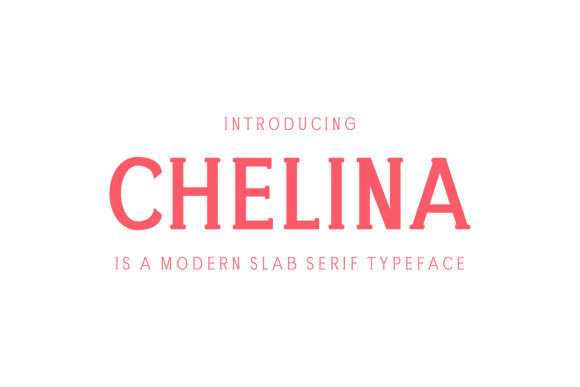
Have you ever scrolled through a website or picked up a product package and instantly felt a sense of approachability, confidence, and quiet coolness—without knowing why? Chances are, a thoughtfully chosen typeface like Chelina played a subtle but powerful role. Chelina is a chunky, cool, and friendly slab serif font with a distinctly contemporary look—and it’s quickly becoming a favorite among designers, brands, and educators who want clarity without coldness, strength without stiffness.
What Exactly Is Chelina?
At its core, Chelina belongs to the slab serif family—a category of typefaces defined by thick, block-like serifs (the small lines or strokes attached to the ends of letters). Unlike traditional slab serifs like Rockwell or Courier—which often lean toward industrial, utilitarian, or retro vibes—Chelina reimagines the genre for today’s visual landscape. Its letterforms are intentionally chunky: generous in weight, open in spacing, and balanced in rhythm. Yet it avoids heaviness or monotony thanks to carefully tuned curves, subtle contrast, and a relaxed, humanist touch.
Think of Chelina as the friendly neighbor who also runs a successful design studio—warm, grounded, and quietly confident. It doesn’t shout; it invites. And that duality—bold yet welcoming, structured yet expressive—is what makes it uniquely versatile.
Key Visual Characteristics
- Robust x-height: Tall lowercase letters improve readability at smaller sizes—ideal for digital interfaces and mobile-first content.
- Generous counters and apertures: The open inner spaces of letters like “a,” “e,” and “s” enhance legibility, especially on screens or in low-resolution print.
- Softened terminals and rounded corners: Unlike rigid geometric slab serifs, Chelina features gentle transitions that lend warmth and friendliness.
- Consistent stroke weight: Minimal variation between thick and thin strokes gives it stability and modern simplicity—perfect for branding systems that prioritize cohesion.
Why Chelina Matters in Today’s Design Landscape
In an era saturated with ultra-thin fonts, chaotic variable type, and AI-generated visuals, Chelina stands out by embracing intentional simplicity. It answers a growing need across industries: the desire for typography that communicates trust, inclusivity, and clarity—without sacrificing personality.
Consider how typography shapes perception. A healthcare app using a fragile, overly decorative font might unintentionally signal fragility or inaccessibility. In contrast, Chelina’s sturdy forms and even color (visual density) project reliability—making it an excellent choice for wellness platforms, educational tools, or civic websites where users need to feel supported, not overwhelmed.
Real-World Applications
- Branding & Identity: Startups and creative studios use Chelina for logos and wordmarks because it balances memorability with professionalism. For example, a sustainable fashion brand might pair Chelina’s bold headlines with a clean sans-serif body text to express both earthy authenticity and modern polish.
- Educational Materials: Teachers and course designers choose Chelina for slide decks, handouts, and learning management systems. Its high legibility helps neurodiverse learners, younger students, and readers with low vision engage more easily with content.
- Digital Interfaces: From dashboard headers to call-to-action buttons, Chelina adds visual hierarchy without visual noise. Its chunky weight ensures strong presence—even at 16px—while remaining comfortable to read over time.
- Print & Packaging: On product labels, posters, or book covers, Chelina delivers impact at a glance. Its slab structure holds up beautifully in screen printing and offset processes, making it production-friendly across mediums.
Chelina vs. Common Misconceptions
Because Chelina looks bold and friendly, some assume it’s “just for playful brands” or “only works in headlines.” That’s a misconception—and one worth clarifying.
Myth: “Chunky fonts aren’t suitable for body text.” Reality: While Chelina shines in display roles (headlines, signage, logos), its thoughtful proportions and generous spacing allow it to function effectively in short-form body copy—especially in editorial layouts, infographics, or bilingual publications where visual consistency matters more than paragraph length.
Myth: “Friendly fonts lack authority.” Reality: Authority isn’t about austerity—it’s about credibility and clarity. Chelina conveys competence through its structural integrity and typographic discipline. Compare it to a well-designed public sign: it doesn’t need ornate flourishes to be taken seriously. It just needs to be seen, understood, and trusted.
Myth: “Slab serifs are outdated.” Reality: Slab serifs have evolved dramatically since their 19th-century origins. Chelina reflects decades of digital typography refinement—optimized for rendering engines, responsive scaling, and accessibility standards like WCAG 2.1. It’s not nostalgic; it’s next-generation functional.
How Chelina Supports Inclusive & Ethical Design
Typography is never neutral—it carries cultural, cognitive, and emotional weight. Chelina was designed with inclusion in mind: its clear letterforms reduce ambiguity (e.g., distinguishing “I”, “l”, and “1”), its spacing accommodates diverse reading speeds, and its robust weight supports assistive technologies that rely on consistent visual contrast.
For educators, this means fewer barriers to comprehension. For developers, it means better performance in CSS font stacks and fallback strategies. For marketers, it means broader audience resonance—across age groups, languages, and ability levels. In short, choosing Chelina isn’t just an aesthetic decision; it’s a small but meaningful step toward more humane digital experiences.
Getting Started With Chelina
Chelina is available through major font licensing platforms—including Google Fonts (as a variable font option), Adobe Fonts, and independent foundries. When integrating it into your workflow:
- Pair it wisely: Combine with a neutral, highly legible sans-serif (like Inter, Poppins, or Manrope) for body text to maximize contrast and hierarchy.
- Leverage its variable axis: If using the variable version, adjust weight and width dynamically—lighter for subheads, bolder for hero text—to create fluid, responsive typography systems.
- Test across devices: Preview how Chelina renders on iOS, Android, Windows, and macOS—not all slab serifs behave the same way across operating systems.
- Respect licensing: Always verify usage rights for commercial projects, apps, or embedded environments (e.g., SaaS dashboards).
Final Thoughts: More Than Just a Font
Chelina is a reminder that great typography doesn’t need to be complicated to be effective. Its chunky silhouette, friendly curves, and contemporary clarity make it more than a stylistic choice—it’s a communication tool rooted in empathy and intention. Whether you’re launching a nonprofit campaign, designing a classroom resource, building a fintech dashboard, or refreshing your portfolio site, Chelina offers a rare blend: visual confidence paired with human warmth.
And in a world where attention is scarce and trust is earned one pixel at a time, that balance isn’t just nice to have—it’s essential.
If you're exploring typography for your next project, ask yourself: Does this typeface help people understand, feel welcome, and act with confidence? With Chelina, the answer is often a resounding yes.