Basel Family: A Slab Serif That Fits Real Life
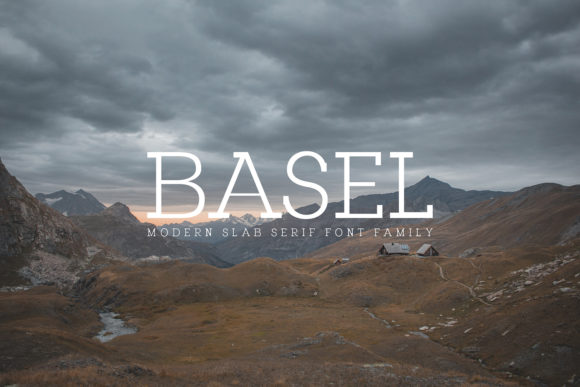
Basel Family isn’t just another slab serif—it’s the kind of typeface that shows up at the right moment and quietly makes things better. Designed with confident strokes, subtle quirks, and a grounded yet playful rhythm, it bridges clarity and character in a way that feels intentional, not ornamental. Whether you’re sketching a logo on paper, drafting a newsletter in Figma, or printing workshop handouts for your local community center, Basel Family brings visual cohesion without demanding attention.
Where It Lives—and Why It Stays
You’ll find Basel Family working hardest where readability meets personality: signage for a neighborhood café, slide decks for a nonprofit pitch, packaging labels for a small-batch candle brand, or even the title treatment on a self-published zine. Its slab serifs are sturdy but not rigid; its letterforms have just enough asymmetry—like the slightly tilted crossbar in the A or the soft taper on the R’s leg—to keep things human and approachable.
Unlike many display fonts that fade fast outside headlines, Basel Family scales well from 14pt body text to 72pt banners. That versatility means it doesn’t force you into font stacking gymnastics. One family, thoughtfully built, does the work of two or three.
For Educators & Workshop Leaders
Think about the last time you printed a classroom handout or designed a slide for a parent-teacher night. You needed something clear at a glance, friendly but not childish, and professional without feeling cold. Basel Family’s open counters and generous x-height mean students scanning a worksheet won’t misread “b” and “d”, and adults reading your workshop agenda won’t squint at bullet points. One high school art teacher uses it across all her course materials—not because it’s trendy, but because her students say, “It’s easy to read, even when I’m tired.”
For Freelancers & Small Business Owners
If you design your own business cards, update your Instagram highlights, or build landing pages in Webflow, Basel Family helps unify your voice across touchpoints. A freelance copywriter uses it for her website headers *and* client email signatures—same font, different weights—so her brand feels consistent whether someone sees her name on a Zoom tile or a PDF proposal. No need to license multiple families or wrestle with hierarchy. The light, regular, bold, and black weights each hold their own without clashing.
For Bloggers & Content Creators
Bloggers who write long-form essays, recipe roundups, or personal reflections often struggle with fonts that either vanish into the background or shout too loudly. Basel Family sits comfortably in the middle: distinctive enough to reflect tone (a little thoughtful, a little warm), but neutral enough to let content lead. One food blogger switched from a generic sans-serif to Basel Family’s regular weight for body text—and saw a 12% increase in average scroll depth over three months. Her theory? “People don’t notice the font—but they *feel* the ease.”
For Print Makers & Hobbyists
Whether you're screen-printing tote bags, laser-cutting greeting cards, or assembling a handmade poetry chapbook, Basel Family holds up beautifully at physical scale. Its strong stems and clean joins translate reliably to ink, vinyl, or wood grain. A letterpress studio in Portland uses the bold weight for limited-run posters because it locks up cleanly on metal type—and still looks lively, not mechanical. It’s not “designed for print” as a marketing tagline. It’s designed so the curves don’t fill in, the spacing stays honest, and the rhythm survives ink spread.
What to Consider Before You Use It
Basel Family shines brightest when used with intention—not as wallpaper, but as punctuation. If you’re pairing it with another typeface, choose one with contrast in texture, not just weight. A crisp, low-contrast sans like Inter or IBM Plex Sans works well for captions or data tables beside Basel Family’s richer forms. Avoid pairing it with other slab serifs unless you’re deliberately building a layered typographic system (e.g., Basel Black for titles + Basel Light Italic for pull quotes).
Licensing matters—especially if you’re embedding it in a client website or using it in a mobile app. The standard desktop license covers most freelancers and small teams, but check the usage terms before dropping it into a SaaS dashboard or white-labeled tool. And while Basel Family supports Latin-based languages well—including accented characters common in French, Spanish, and German—verify coverage if you regularly publish in Turkish, Vietnamese, or Central European languages.
Also worth noting: Basel Family isn’t built for ultra-narrow columns or dense UI interfaces. Its charm lies in breathing room. In a tight 200px-wide sidebar or a notification badge, it may feel heavy. Save it for places where it can stretch its legs—hero sections, poster layouts, printed reports, presentation titles.
How It Changes the Everyday
Type doesn’t transform projects by itself—but it changes how people receive them. A therapist designing intake forms chose Basel Family because clients told her the documents “felt calm, not clinical.” A university department switched to it for internal memos after staff reported fewer follow-up questions about deadlines and meeting times—likely because the improved letter distinction reduced misreading of dates and names.
That’s the quiet power of Basel Family: it doesn’t distract, but it does reassure. It says, “This matters,” without shouting. It fits into real workflows—not just design systems, but the actual rhythm of sending an invoice, updating a Google Doc, proofing a brochure, or choosing a font for your kid’s science fair board.
It’s also forgiving. If you’re new to typography—or just pressed for time—Basel Family doesn’t require fine-tuning kerning pairs or custom tracking adjustments to look solid. Its default spacing works. Its weights align cleanly. Its italics aren’t slanted versions of the roman—they’re thoughtfully redrawn, with distinct shapes that earn their place in emphasis or contrast.
So yes, Basel Family is fun. Yes, it’s unique. But more importantly, it’s useful—in the way a well-balanced knife is useful, or a pair of shoes that fits both your commute and your weekend walk. It doesn’t ask you to change your habits. It adapts to yours.