Grary: A Timeless Sans Serif Font
If you’ve ever scrolled through a clean, confident website—or admired the quiet elegance of a well-designed brochure—you’ve likely encountered fonts that feel both modern and reassuringly familiar. Grary sits comfortably in that sweet spot: a sans serif typeface built not for trend-chasing, but for clarity, warmth, and quiet authority.
More Than Just Clean Lines
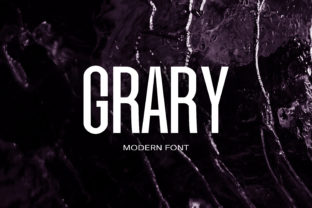
Grary isn’t trying to shout. Its charm lies in subtle craftsmanship—balanced proportions, open apertures, and gently tapered terminals that soften its geometry without sacrificing structure. The x-height is generous enough to support strong legibility at small sizes, yet its letterforms retain distinct personality: the lowercase a has a soft, single-story shape; the g features a graceful, closed double loop; and the uppercase R carries just enough flare in its leg to feel intentional—not decorative, but human.
Unlike ultra-thin or highly geometric sans serifs that can feel clinical or detached, Grary brings warmth through rhythm and consistency. It doesn’t rely on novelty—it earns trust through reliability. That’s why designers reach for it when they need typography that supports content rather than competes with it.
Where Grary Fits in Real Work
Professionals across disciplines use Grary where readability, tone, and cohesion matter most—especially when the audience isn’t looking for “font drama.” Consider these everyday uses:
- Brand identity systems: Startups and established businesses alike choose Grary for logos, wordmarks, and supporting text because it scales beautifully—from tiny app icons to large-format signage—without losing nuance.
- Educational materials: Teachers and course creators use Grary in slide decks, handouts, and LMS interfaces. Its even color and clear letterforms reduce visual fatigue during long reading sessions—critical for students and adult learners alike.
- Digital publishing: Bloggers, newsletter writers, and independent publishers apply Grary as a web-safe alternative (via variable font files or optimized WOFF2 delivery) for body text. Its hinting and spacing hold up well across devices—even on lower-DPI screens.
- Marketing assets: From email headers to social media carousels, Grary balances approachability and polish. It reads as friendly but never casual—ideal for B2B SaaS landing pages or nonprofit campaign visuals where credibility and empathy must coexist.
A Practical Choice for Creators and Teams
Freelancers often tell us Grary shortens revision cycles. Clients respond intuitively to its balance—they recognize it as “professional” without needing justification. That’s not accidental. Grary was designed with real-world constraints in mind: consistent vertical metrics across weights, tight but breathable default tracking, and optical sizing baked into the variable axis.
For developers and product teams, Grary’s variable font format means one file handles everything from light UI labels (300 weight) to bold section headers (700 weight)—no extra HTTP requests, no layout shifts. And because its italic is true-drawn (not algorithmically slanted), emphasis feels earned, not tacked-on.
What to Watch For When Using Grary
Like any strong tool, Grary works best when matched thoughtfully to context—not applied universally. Here’s what seasoned users keep in mind:
- Pairing matters—but it’s forgiving. Grary pairs naturally with understated serifs like Charter or PT Serif for print reports, or with neutral monospaced fonts like JetBrains Mono for code documentation. Avoid overly ornate or condensed companions—they dilute Grary’s calm confidence.
- Weight selection shapes tone. Use Grary Light sparingly—best for delicate captions or minimalist branding. Default to Regular or SemiBold for body copy; reserve Bold for hierarchy, not emphasis. Overusing bold flattens its natural contrast.
- Line height and measure need attention. At 16px body size, aim for 1.5–1.6 line height. On wider containers (e.g., blog posts >700px), tighten tracking slightly (-10–20 units) to maintain rhythm. Grary rewards thoughtful typesetting—not just dropping it in and walking away.
- Test in real environments. What looks crisp on your high-end monitor may soften on older Android tablets or Windows laptops with ClearType disabled. Preview using browser dev tools with device emulation—and check grayscale rendering if accessibility compliance is required.
Why It Endures Beyond Trends
Trends come and go—ultra-thin fonts, exaggerated grotesques, playful variable axes—but Grary avoids chasing them. Instead, it focuses on fundamentals: how letters group, how space breathes between lines, how weight translates to meaning. That’s why educators use it in literacy apps for dyslexic readers (its open counters and consistent spacing reduce ambiguity), and why financial advisors choose it for client-facing dashboards (clarity under pressure matters).
It also adapts quietly. In dark mode interfaces, Grary’s slightly higher contrast ratio (compared to ultra-low-contrast alternatives) maintains legibility without glare. In multilingual projects, its extended Latin character set covers Western, Central, and Eastern European languages—and includes thoughtful OpenType features like localized numerals and case-sensitive forms.
Getting Started Thoughtfully
You don’t need to overhaul your entire design system to benefit from Grary. Try it in one high-impact place first: your email signature, your presentation template, or the body text of your next blog post. Compare side-by-side with your current font—not for “which looks cooler,” but for “which helps readers move faster, understand deeper, and remember longer.”
When evaluating licensing, note that Grary offers flexible options: one-time desktop purchase, cloud-based web font plans with monthly analytics, and extended licenses for embedded use in SaaS platforms or mobile apps. There’s no forced subscription—just transparent tiers aligned to actual usage.
Ultimately, Grary isn’t about standing out. It’s about showing up—clearly, consistently, and with quiet competence. In a world saturated with visual noise, that kind of presence is rare. And increasingly valuable.