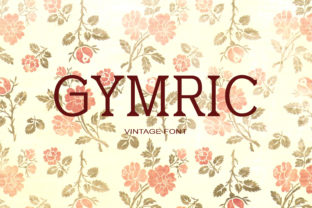
Gymric: A Serif That Feels Like a Conversation, Not a Command
Typography isn’t just about legibility—it’s about tone, timing, and trust. In a digital landscape saturated with high-contrast sans-serifs, algorithmically optimized UI fonts, and expressive variable typefaces pushing technical boundaries, something quietly compelling has emerged: Gymric. It’s not loud. It doesn’t demand attention with ornate flourishes or dramatic contrast. Instead, Gymric is a casually playful serif—clean, grounded, and refreshingly unpretentious. Its simplicity isn’t minimalism for minimalism’s sake; it’s clarity with warmth, structure with a wink.
Why a “Casually Playful Serif” Matters Right Now
We’re navigating a shift in how people engage with text—not just as information, but as experience. Readers scroll faster, skim deeper, and sense intention before they finish the first sentence. Brands and creators alike are moving away from rigid formality toward authenticity that feels human-scaled. That’s where Gymric fits: it bridges the reliability of traditional serif typography with the relaxed rhythm of contemporary communication.
Think about the emails you actually open, the newsletters you save, the landing pages where you pause—not because of flashy animation, but because the words *feel* like they were chosen and set with care. Gymric supports that feeling. Its gentle stroke modulation, open counters, and balanced x-height make it highly readable at small sizes on screen, while its subtle personality shines in headlines, pull quotes, or brand voice elements. It doesn’t shout “professional”—it simply *is* professional, without stiffness.
From Print Tradition to Digital Intimacy
Serif fonts have long carried connotations of authority, legacy, and editorial weight—think Times New Roman in newspapers or Georgia in early web design. But many classic serifs feel either too formal (distant) or too dated (disconnected) for today’s creative workflows. Meanwhile, newer display serifs often lean heavily into eccentricity or nostalgia, which limits their versatility across contexts.
Gymric represents an evolution: it retains the structural honesty of serif letterforms—clear ascenders and descenders, logical stroke endings—but softens their gravity. The terminals are rounded, not sharp. The contrast between thick and thin strokes is present but restrained. There’s no forced elegance—just quiet confidence. That makes it unusually adaptable: equally at home in a thoughtful Substack essay, a boutique studio’s identity system, a teacher’s lesson handout, or a sustainable brand’s product packaging.
How Creators and Professionals Are Using Gymric—Realistically
You won’t find Gymric dominating corporate annual reports or government portals—and that’s intentional. Its strength lies in spaces where voice matters more than scale. Consider these grounded examples:
- A freelance copywriter uses Gymric for client-facing mood boards—not as body text, but for headline treatments and value proposition statements. Its approachability helps clients connect with messaging before diving into strategy decks.
- An independent educator selects Gymric for printable worksheets and slide decks. Students consistently report the material “feeling easier to focus on,” likely due to its even color and generous spacing—no eye strain, no visual noise.
- A small-batch ceramicist pairs Gymric with a neutral sans-serif for website typography. The serif anchors the brand’s handmade ethos without leaning into clichéd “artisanal” tropes. It says “thoughtful craft,” not “vintage revival.”
- A newsletter curator sets article titles in Gymric and body text in a crisp, low-contrast sans. The contrast feels intentional—not jarring—guiding attention without hierarchy overload.
What ties these uses together isn’t aesthetic uniformity, but shared intent: to communicate with clarity, warmth, and quiet distinction. Gymric doesn’t solve every typographic problem—but it solves a specific, increasingly common one: how to look polished without looking polished *at all costs*.
Trend Alignment—Without Chasing Trends
Gymric resonates with several interlocking shifts, but never as a reaction. It aligns with the growing preference for “soft professionalism”—a style that values competence and care over perfection and polish. It supports the rise of “intentional minimalism,” where reduction serves meaning rather than aesthetics alone. And it fits seamlessly into what designers call “contextual typography”: choosing type not by category (serif vs. sans), but by role (voice, emphasis, rhythm, platform).
Technologically, Gymric performs well across modern rendering engines—including variable font support where available—so it scales cleanly from mobile screens to large-format prints. Its OpenType features include standard ligatures and alternate numerals, giving subtle flexibility without complexity. No need to master advanced typographic settings to get good results. That accessibility lowers the barrier for non-designers—bloggers updating their WordPress theme, educators building Canva presentations, founders tweaking their Notion workspace.
Practical Integration: What Works (and What Doesn’t)
Gymric thrives when used with intention—not ubiquity. Here’s what practitioners observe in real use:
- Best for: Headlines, short-form editorial text, branding applications (logotypes, business cards), interface labels where warmth enhances UX, printed collateral like brochures or zines.
- Pair thoughtfully: It harmonizes beautifully with neutral, humanist sans-serifs like Inter, Manrope, or Work Sans. Avoid pairing with overly geometric or high-contrast sans-serifs—they can clash tonally.
- Avoid overuse: As body text in long-form web articles, Gymric can fatigue some readers—especially at smaller sizes or on lower-DPI screens. Reserve it for shorter passages or higher-contrast layouts.
- Watch spacing: Its relaxed proportions reward generous line height and letter spacing in display settings. Tight tracking undermines its airiness.
One designer noted that after switching her portfolio site’s headline font to Gymric, she received unsolicited feedback like, “Your work feels more *present* now.” That’s not about the font alone—it’s about how Gymric subtly shifts perception, making content feel less curated, more conversational.
Looking Ahead—Not Forward, But Deeper
The future of typography isn’t about bigger, bolder, or more variable—it’s about more resonant. As AI tools accelerate layout generation and font libraries expand exponentially, the value of a typeface like Gymric grows: it offers discernible character without demanding attention. It rewards close reading, not just scanning. It supports voice instead of substituting for it.
That doesn’t mean Gymric will replace system fonts or dominate bestseller lists. Its relevance lies in its restraint—in being the right choice for the right moment, not the default choice for every moment. For professionals managing multiple platforms, creators balancing authenticity and polish, and everyday users seeking calm amid visual clutter, Gymric offers something increasingly rare: typographic empathy.
It reminds us that good design doesn’t always shout innovation—it sometimes whispers recognition. And in a world where people crave connection more than novelty, that whisper carries further than we expect.