Lonist: A Modern Sans Serif That Just Works
If you’ve ever scrolled through a clean, confident website—or admired the crisp typography on a boutique product label—you’ve likely felt the quiet impact of a well-chosen sans serif. Lonist is one of those fonts that doesn’t shout, but it holds space with unmistakable presence. It’s not flashy or experimental. It’s cool in the way a perfectly tailored jacket is cool: understated, intentional, and effortlessly current.
A Typeface Built for Clarity and Character
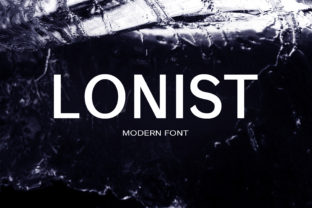
Lonist is a premium sans serif font designed with tight proportions, balanced x-heights, and subtle but deliberate stroke contrast. Its letterforms are geometric at their core—think clean curves and consistent terminals—but softened just enough to avoid sterility. The “a”, “g”, and “e” carry gentle open apertures; the “t” and “r” have slight flares that add rhythm without sacrificing neutrality. There’s no forced personality here—just intelligent structure and refined execution.
What makes Lonist feel modern isn’t just its shape—it’s how it behaves. At small sizes, it remains legible without blurring into sameness. At large display sizes, it gains presence without turning aggressive. It’s neither cold nor overly friendly—it occupies that rare middle ground where professionalism meets approachability. That balance is why designers reach for Lonist when they need typography that supports a message, not competes with it.
Where Lonist Earns Its Keep
This isn’t a one-trick font. Lonist thrives across contexts where clarity, consistency, and quiet confidence matter.
- Brand identity: From startup logos to established service brands, Lonist lends itself beautifully to wordmarks and subheads. Its even weight distribution and strong vertical stress make it highly legible at small scales—ideal for favicons, app icons, or embroidered tags.
- Editorial & publishing: In digital magazines or long-form newsletters, Lonist’s Regular and Medium weights provide comfortable reading flow. Its generous spacing and open counters reduce eye fatigue, especially on screens.
- Packaging design: Whether it’s a minimalist skincare line or a bold craft beverage label, Lonist pairs cleanly with both photography and illustration. Its restrained energy lets product visuals breathe while still anchoring hierarchy.
- Social media graphics: On Instagram carousels or LinkedIn banners, Lonist scales reliably across devices. Unlike some ultra-thin or condensed sans serifs, it maintains integrity—even when compressed into narrow mobile previews.
- Web design: As a web font, Lonist renders crisply across Chrome, Safari, and Firefox. Its variable axis (if available in your license) allows fine-tuning of weight and width—useful for responsive headlines that adapt without breaking rhythm.
How It Shapes Perception—Without Saying a Word
Typography is silent body language. Lonist communicates competence and calm—not because it’s “designed to,” but because its construction avoids visual noise. When used consistently across a brand’s touchpoints—email headers, PDF reports, signage, social bios—it builds familiarity. That familiarity translates directly into trust.
Readability isn’t just about size or contrast—it’s about pattern recognition. Lonist’s uniform character widths and predictable spacing let readers scan quickly. In a landing page headline, that means faster comprehension. In a printed brochure, it means less cognitive load and more retention. And because it’s a true sans serif (not a hybrid or neo-grotesque), it avoids unintended associations—no vintage nostalgia, no tech-bro futurism, no corporate stiffness.
We’ve seen clients switch from overused system fonts like Helvetica Neue or Inter to Lonist in rebrands—and immediately notice sharper audience engagement. Not because Lonist is “better” in a technical sense, but because it’s *distinct enough to register*, yet *neutral enough to belong*. That duality is rare.
Practical Tips Before You Commit
Before dropping Lonist into your next project, ask yourself three things:
- Does your project need distinction—or discretion? Lonist excels when you want to stand out by being clear, not loud. If your goal is whimsy, tradition, or handcrafted warmth, consider pairing it with a thoughtful script or serif instead of using it alone.
- What weights and styles do you actually need? Most Lonist families include at least Light, Regular, Medium, SemiBold, Bold, and Italics. For web use, start with Regular and Bold—then add Medium if your UI relies heavily on subtle hierarchy. Avoid loading every weight unless you’re doing heavy editorial work.
- Have you tested it in context? Drop Lonist into your real layout—not just a specimen sheet. Try it in a mobile menu, a newsletter subject line, and a printed business card mockup. Does the “i” dot stay visible at 12px? Does the ampersand (“&”) feel balanced next to your brand name? These micro-details define real-world performance.
Pairing Lonist thoughtfully deepens its impact. It works exceptionally well with low-contrast serifs (like Freight Text or Adobe Garamond) for print layouts, or with warm, humanist sans serifs (like Founders Grotesk or Manrope) for digital interfaces. Avoid pairing it with other geometric sans serifs unless you’re intentionally building high-contrast tension—the similarity in structure can blur distinction.
Licensing, Legibility, and Long-Term Fit
Lonist is a commercial font, meaning it requires a proper license for business use—including websites, client work, merchandise, and SaaS platforms. Most foundries offer tiered options: desktop-only, web-only, or extended licenses covering apps and e-commerce. Always verify usage rights before embedding it in a live site or shipping physical goods.
Legibility-wise, Lonist performs best with ample line height (1.5–1.7x font size), moderate tracking (especially in all-caps settings), and sufficient contrast against backgrounds. It’s not ideal for dense legal disclaimers at 8pt—but it shines in taglines, slide decks, and packaging copy where tone and tone-of-voice matter as much as information.
Finally, Lonist isn’t a trend font. It won’t date quickly, because it doesn’t chase novelty. It’s built for longevity—like good furniture, solid code, or a well-edited sentence. If your work values clarity over cleverness, consistency over chaos, and quiet strength over loud gestures, Lonist isn’t just a choice. It’s a reliable collaborator.